Categories
Clinical General Innovation Opinion Public Health

A Quick Guide to HPV Vaccination

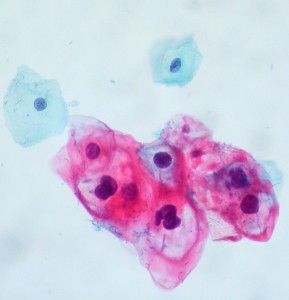
ThinPrep of CIN 1/HPV Photo from Ed Uthman
ThinPrep of CIN 1/HPV
Photo from Ed Uthman

Human papillomaviruses (HPV) are non-enveloped, double-stranded DNA viruses which infect human mucosal and epithelial tissues. They survive well in the environment and can be spread through direct contact with a wart, a fomite (ex. doorknob or toilet seat), or when an infant passes through the birth canal.  HPV is now the most common sexually transmitted infection in the US1. Even though most infections resolve spontaneously without further progression, it can lead to the formation of skin warts and has been associated with cervical cancer since the 1990s. HPV-6 and HPV-11, two types of HPV, are known to cause genital warts and low-grade cervical abnormalities, while HPV-16 and HPV-18 cause about 70% of cervical cancers. Despite the prevalence and potential severity of this viral infection, there is no specific treatment for HPV. Medical intervention involves treating clinical manifestations of the infection, including removal of warts or cervical neoplasias.

The spread of HPV can be reduced, but not prevented, through the use of condoms and other methods of physical barrier protection. In addition, two new inactivated subunit HPV vaccines, Gardasil and Cervarix, were recently approved by the FDA. The vaccines have no therapeutic effect on those who are already infected and the duration of vaccine protection is unknown, but studies are underway to determine if immunity wanes as time goes by. Both vaccines use the L1 capsid protein, which is produced through recombinant technology. This capsid protein then self-assembles into noninfectious virus-like particles (VLP), which function to elicit a memory immune response.

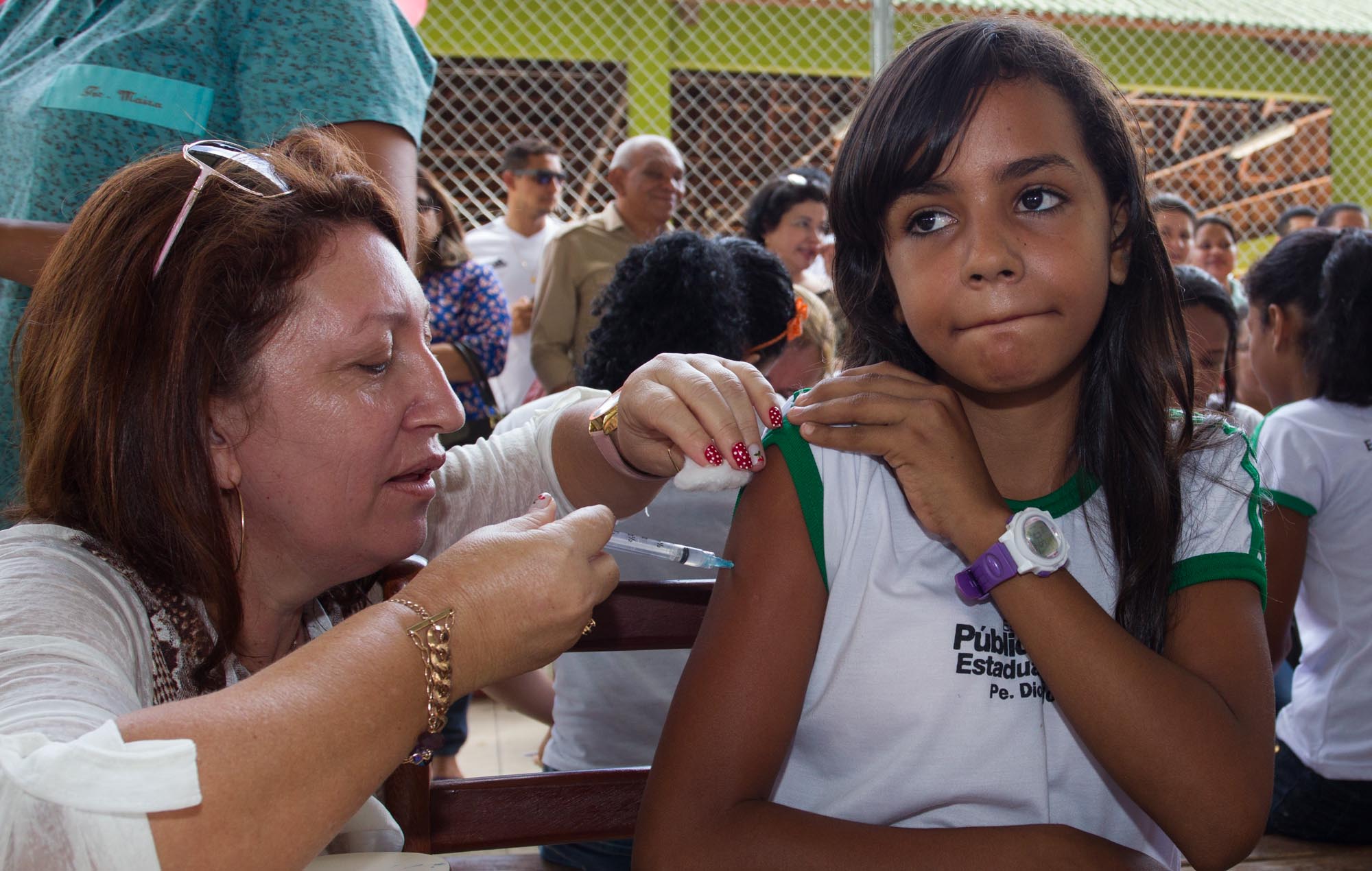
In 2006, Gardasil, a quadrivalent vaccine (HPV4), was approved by the FDA for both males and females of ages 9 to 26. Gardasil is composed of HPV6, HPV11, HPV 16, and HPV 18 and is administered in a 3 dose course. If a patient has not had all 3 vaccine doses by the age of 26, the remaining rounds can still be administered. HPV4 vaccination is also recommended for all immunocompromised males and men who have sex with men under the age of 26. In 2009, Cervarix, a bivalent vaccine (HPV2) containing HPV 16 and HPV 18, was approved by the FDA. HPV2 is approved for females ages 10 to 25, but is not approved for use in males. Neither HPV4 nor HPV2 contain any preservatives or antibiotics, and more than 99% of those who are vaccinated produce an antibody response to the viral types present in the vaccines.  Prior infection with one of the virus types does not diminish the protection against the other types of HPV present in the vaccine.

The vaccines should not be administered to those who are allergic to any vaccine components, are acutely ill, or pregnant women. If a woman becomes pregnant prior to completing the 3-dose vaccination, the remaining doses should be postponed until the completion of the pregnancy. Side effects of HPV vaccination include pain or swelling at the site of vaccination and fever. Overall, no serious adverse reactions have been documented.
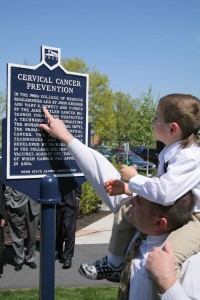
Dr. John Kreider's son and grandson with a historical marker recognizing Dr. Kreider and Dr. Mary K. Howett's work which lead to the development of the HPV vaccination. Photo courtesy of PennStateNews.
Dr. John Kreider’s son and grandson with a historical marker recognizing Dr. Kreider and Dr. Mary K. Howett’s work which lead to the development of the HPV vaccination. Photo courtesy of PennStateNews.

Despite the fact that HPV-16 and HPV-18 are highly associated with cervical cancer, controversy has surrounded the HPV vaccines. In general, parents are understandably reluctant to vaccinate their children against a sexually transmitted infection at such a young age, perhaps because the duration of the protection resulting from vaccination is still unknown. Dr. Diane Harper of the University of Missouri-Kansas City School of Medicine does not believe the vaccine should be mandated by law since only 5% of women infected with HPV develop cervical cancer2. While that seems valid logically, the basic principle of vaccination is to prepare the body’s immune defenses for eliminating virulent agents before they can lead to harmful medical conditions. As an example, consider poliovirus. Poliovirus affects each individual differently, with up to 95% of the total cases being inapparent or asymptomatic3. Only a small percentage of those who are infected with poliovirus get paralytic polio, the condition which was seen in the public eye so often.  Even though infection with poliovirus rarely leads to paralytic polio, parents do not usually hesitate to vaccinate their children in order to prevent this outcome. So, both vaccines prevent a serious outcome which rarely occurs as a byproduct of viral infection, yet polio vaccination has general support around the globe. Despite the fact that the HPV infection doesn’t always result in cervical cancer, parents should not overlook this vaccine, as it drastically reduces the risks of this serious complication even further.

Sources:
1) http://www.cdc.gov/vaccines/pubs/pinkbook/hpv.html
2) http://www.npr.org/2011/09/19/140543977/hpv-vaccine-the-science-behind-the-controversy
3) http://www.cdc.gov/vaccines/pubs/pinkbook/polio.html


Categories
General Lifestyle Narrative Reflection

Stop, Look, Go | An Approach to the Medical Student Lifestyle

Medical school is not what I expected. I’m neither saving lives day in and day out, nor am I the most knowledgeable person in my class. I’m not performing medical miracles and I’m not revolutionizing medicine as I envisioned I would be (yes, with just my twenty odd years of “life experience”). Instead, I feel as though I am trying to drink from a full powered water hose that won’t shut off. I am continuously faced with my own idiocy, ineptitude, and more importantly, fear. I see these super-human, overly capable figures who bear the name of doctor and wonder if I’ll ever be able to stand beside them. And then I stop, look and go.

Stop, Look and Go” is a theory discussed by a monk who goes by the name of David Steindl Rast. He believes that the key to happiness is to be grateful for every moment that one has in life. However, he stipulates that this can only come about once one realizes that in every moment there lie an infinite number of opportunities at ones disposal. Now, keep in mind that this is, of course, easier said than done. I am far more comfortable wallowing in my self-loathing guilt-infested thoughts about all the opportunities I’ve missed, than focusing on the promise of the moment at hand. Rast’s ideas challenge human beings to do more−all by employing a simple rule we learned to follow as children before crossing roads.

So, what do I gain from the application of said rule? Here is an example of my utilization of this theory, albeit on a rather small scale:

When I Stop, I allow myself to be in the here and now. I am not thinking about the amount of material I have to learn over the next few days, or what I neglected to go over the night before. I am simply absorbing what is provided to me in this moment in time.

Then I Look. Of course, this requires so much more than simply looking. It requires the utilization of every sense to, as Rast puts it, take in the enormous amount of richness provided to us. Looking is the process of making associations and enjoying the present. It requires full awareness. For example, I happen to encounter a patient with inguinal hernias in a clinical setting, after just learning about the condition in the classroom setting. This is a highly enriching experience−an invaluable experience.

Finally, I Go. Now that I have grounded myself in the present and made associations about the overlap of opportunities of that present, I move to motivate myself to do something with this newfound peace and knowledge. This ranges from sharing my thoughts with a colleague who might appreciate them; to renewing my interest in a subject matter I am studying thereby incentivizing myself to continue studying when weary.

For some, all of the above may very well prove to be an exercise in futility and I certainly do not know if everyone will take from this theory what I have−wise monk or not. What I will say is that this has very much widened my perspective on the power of purposeful action and, in my opinion, enhanced my ability to learn and absorb the waterfall that is medical knowledge. To me, medical school is a lot of things. Some days it’s a nightmare, other day the bees knees. Some days it’s taking over my life, other days it is my life. It is difficult but awe-inspiring; fun but tiring. If it were a drug, I’d be an addict and if it were a person we’d be in a torrid love affair.  Overall, medical school and being part of the medical profession is surely an invaluable opportunity and I strive to remind myself of my fortunate position as often as necessary, fueling my daily work and propelling me into the future. Thank you brother Rast.

Categories
General Innovation MSPress Announcements

Welcome to the Medical Student Press: Letter from the Editor-in-Chief

Dear Readers,

I am delighted to welcome you all to the Medical Student Press through the launching of the MSPress Blog. In merely five months, the MSPress has grown to have an international team of medical students serving as editors, peer reviewers, graphic designers, and writers. Our journal has had countless submissions and our diverse blog writers are eager to share their experiences with the medical student community at large. We have made incredible strides and welcome all of those interested in supporting the scholarly expression of medical students to join our team (see application: here).

Beginnings

This project was inspired by of one of my dearest professors at Stanford University, Professor John Willinsky. In my junior year, I decided to take a course entitled “Learning, Sharing, Publishing, and Intellectual Property” through the School of Education. I found myself in a beautiful turret providing a beautiful view of the sunset. In this course, Professor Willinsky taught about the classical and current debates within the publishing world. He explored modern methods of sharing educational resources, and taught us the specifics of John Locke’s theories concerning the commons (Professor Willinsky’s book on this topic is currently in the making). I stayed in the course for the rest of the semester, enjoyed the sunset, and gleaned as much as I could from this publishing giant.

Soon, I began working closely with Professor Willinsky and one of his projects: Open Journal Systems. This open-access software enables editorial teams to collaborate within a seamless online platform. Further, it publishes content that is widely-indexed, thereby providing journal submissions with the opportunity to be widely read and cited. I worked with OJS during my Stanford years as EIC of Intersect: the Stanford Journal of Science, Technology and Society. After the journal was live for three years, it became international and was strongly cited by other scholars (see the Intersect citation line-up here).

The Medical Student Press

The Library of Babel Illustration by Erik Desmazieres

An MS1 at the University of Rochester School of Medicine and Dentistry, I was determined to find a way to continue working with publishing. The MSPress began as a collaboration between myself and Gabriel Glaun, an MS1 at the University of Central Florida College of Medicine. We were both involved with scholarly publishing in our undergraduate years and sought out an opportunity to continue this involvement as medical students; a search I assumed would be similar to bumbling through Jorge Luis Borges’ Library of Babel. While we easily found well-established medical publishers, we surprisingly did not find any large-scale projects that were exclusively for and by medical students. Further, the collaboration between international medical students was one that was seldom seen. A well-indexed, organized, easily accessible, international, and approachable medical student publishing organization was clearly needed, and so our work on the MSPress began.

After a great deal of work and support from other medical students, I am elated to make our medical student publishing organization live. We operate using Open Journal Systems and support open-access publishing through our use of a Creative Commons license for all of our content. Currently under our auspices are The MSPress Journal and The MSPress Blog.

The MSPress Journal accepts research essays, theses excerpts, interviews, scientific papers, medical ethics essays, creative writing, sound pieces, and visual art pieces.  This platform runs directly through the Open Journal System, ensuring our articles are widely disseminated and strongly published.

The MSPress Blog supports those students interested in long term writing, as well as those interested in occasional writing. This platform accepts informal pieces, narratives, sound pieces, visual art pieces, news articles, and pilot studies.

Recognizing that medicine is dynamic, we aim to support the ideas of all students. Get in touch with our team to share your creative ideas. The education of medical students continues far after class and clinic sessions are over. Remain engaged, expressive, and innovative by contributing to the MSPress. We are proud to support the scholarly expression of medical students and welcome all readers, contributors, and creative minds.

We are a versatile team with an exciting new project that is full of potential, so to stay up to date with us, follow our blog, our Facebook page, and our website.


Cheers to the scholarly expression of medical students,

Mica Esquenazi

The MSPress, Editor-in-Chief