Categories
Clinical General Innovation Lifestyle Opinion

Medical Technology: Google Glass and the Future of Medical Education and Practice

Medicine is often a field at the forefront of technology. The importance of the field itself combined with the lucrative payouts seen for successful medical devices attracts many entrepreneurs and companies to the field. One of the most intriguing new technological advances is Google Glass – the augmented-reality glasses developed by tech powerhouse Google. There has been much speculation about the use of Google Glass in medicine. The possible implementation of Google Glass within the medical field raises important questions about how Google Glass may change medical education and practice.

What is Google Glass?

Google Glass is an augmented-reality system developed by Google. It is a voice-controlled, hands-free computing system that is housed in a “glasses” interface that users can wear much like spectacles. It contains an HD capable screen, 5 megapixel camera, and is Bluetooth, WiFi, and GPS enabled. The interface can sync with both Android and iOS phones for integration of information across platforms. Google Glass is currently in its “Explorer” beta phase, with a retail price of $1500. Speculation is that the upcoming retail version will be greatly reduced in cost.

What are the uses for Google Glass in Medicine?

The combination of features present in the Glass package makes it an enticing future medical tool. The main hypothesized role for Glass is in information sharing and transfer. Glass may prove useful in allowing physicians access to patient medical records, imaging studies, and pharmaceutical information in real time via the integrated HD screen. Glass may also be useful for physicians on home-call, as information about patient’s vitals and status can be relayed while the physician is en-route to the care facility. In the surgical field, Glass may help with surgical procedures by providing instant access to reference materials and real-time consults in the operating room. Finally, Glass may provide a more integrated and unique experience for medical students. Students will be able to view patient interactions and procedures with the same point of view (POV) as the physician, providing an unparalleled immersive educational experience. Furthermore, use of Glass by patients will allow students to view patient encounters from the patient’s POV, providing a perspective that many students may never have otherwise experienced.
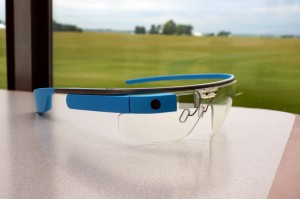
Photo courtesy of Ted Eytan

How is Google Glass Currently Being Used?

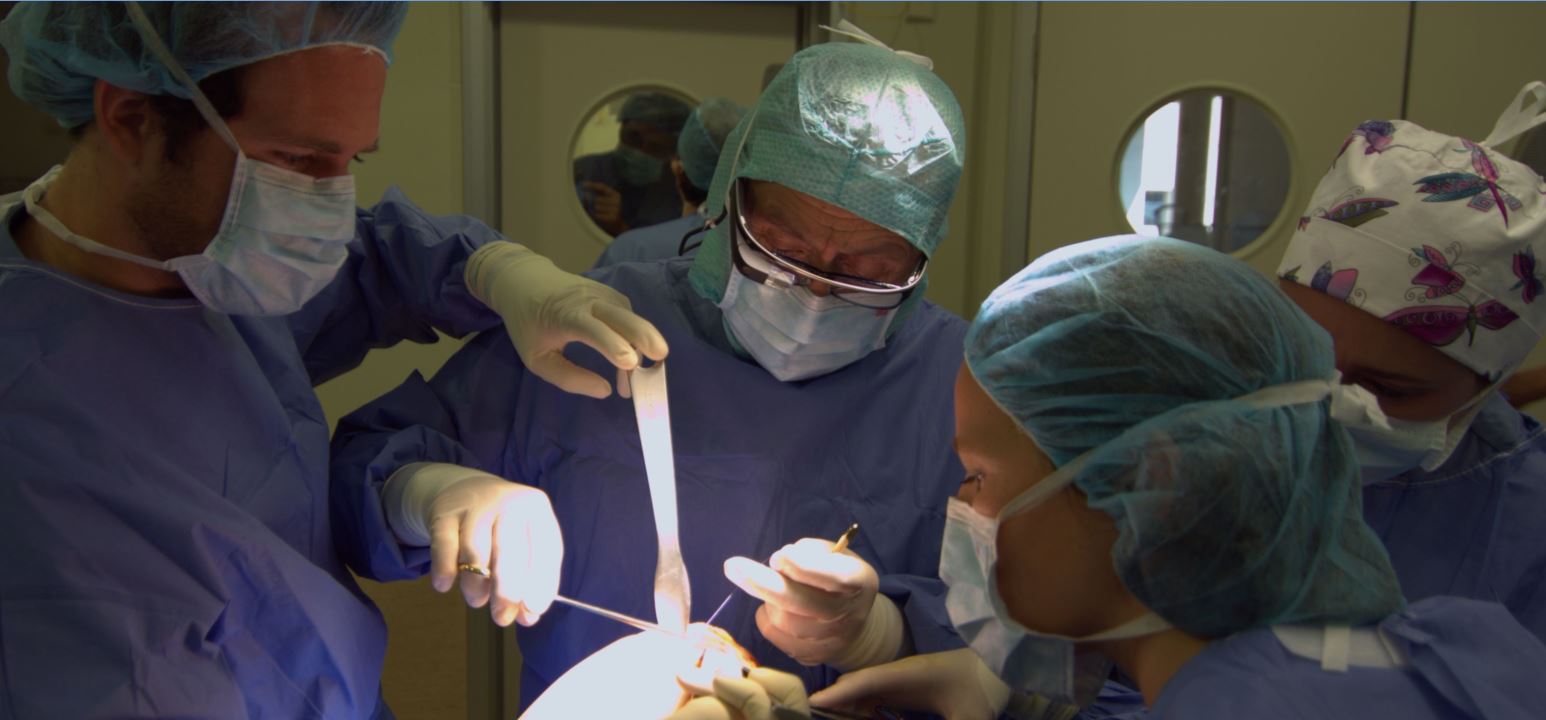
While Google Glass is still in its infant stages, there has been some limited implementation in the medical field. Dr. Christopher Kaeding, an orthopedic surgeon at the Ohio State University, was the first physician to use Glass during a surgical procedure. The procedure was broadcast via Glass to both medical students and faculty at the university.

In terms of education, the University of California – Irvine Medical School has implemented Glass in its innovative iMedEd program. Established in 2010, iMedEd provides medical students at UC Irvine with specialized technological access and training. It started with school-issued iPads for every medical student, and later expanded to point-of-care ultrasound training and use. In 2014, the iMedEd program began utilizing 10 pairs of Glass to be distributed amongst the 3rd and 4th year medical students on the wards. It will be an interesting development to see how Glass is received amongst the students, and how they rate its effectiveness at enriching their educational experience.

What needs to happen for Glass to have widespread adoption in the medical field?

While Glass does have intriguing possibilities, it is by no means a proven entity in the medical field. I believe that for Glass to become an influential medical product two things have to happen. The first thing that must happen is that Glass must be utilized extensively in the consumer market. Many of the questions about Glass revolve around public uncertainty about privacy issues. If Glass gains a large foothold in the consumer marker, patients will become accustomed to interacting with Glass users and will feel less hesitant in a Glass-using setting. The second thing that must happen is that app developers must create useful medical apps for Glass. These apps must both provide utility to physicians and be compliant with HIPAA regulations. Much like EPIC was to electronic medical records, Glass needs companies who are willing to take on the intense regulatory scrutiny of the medical field in app development.

Sources:

  1. http://mhadegree.org/will-google-glass-revolutionize-the-medical-industry/
  2. http://news.uci.edu/press-releases/uci-school-of-medicine-first-to-integrate-google-glass-into-curriculum/
  3. http://osuwmc.multimedianewsroom.tv/story.php?id=663

Featured image:
Google Glass Dr. Guillen

Categories
Clinical General Opinion Public Health

Parents fight Croatian law enforcing mandatory child vaccinations | We don’t need no vaccinations, we don’t need no thought control

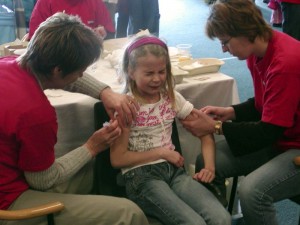
The Croatian constitutional court has made the vaccination of children a legal obligation. Their reasoning behind this law is that “a child’s right to health is more important than a parent’s right to choose (wrongly)”. Their words, not mine, although I do agree.

Vaccination has been a part of paediatric care in Croatia for years, and children have regularly been vaccinated throughout their education, although it has never before been officially mandatory. Now, parents have the potential of being prosecuted if they do not to vaccinate their children. In Croatia, children are vaccinated against the following: tuberculosis, diphtheria, tetanus, pertussis (DTaP), polio, measles, mumps, rubella (MMR), and hepatitis B. It was always said that vaccination was mandatory, but whenever I asked what to do with unvaccinated children, I was given vague answers. Nevertheless, the law now states that a parent’s failure to ensure the vaccination of their child will result in a fine and a visit from social services. A large group of parents, accompanied with some medical professionals, disagree with this and have called for a public discussion.

Photo courtesy of https://www.flickr.com/photos/jaccodeboer/

“Nobody wants to take the responsibility.”

This is an argument many parents have repeated when asked why they don’t want their children vaccinated. The majority of “modern” parents are best pals with Doctor Google, who has told them stories about apparently unnerving side effects of certain vaccinations. Furthermore, media dramatization and sensationalism add another factor in the vaccine debate.  Although the Internet and media in general can provide strong patient education, it can also provide highly biased information thereby providing harmfully improper patient education. Even though they are dramatic and stand out, articles reporting on a child developing a long term and/or life changing disorder or condition are quite rare. Reading such an article invokes fear in readers. Statistics are what matter in possible negative outcomes. How many stories about serious problems arising from a vaccinations exist? And how many children are vaccinated every day? And what are measles, mumps, rubella, polio, pertussis, and the other diseases like when they take hold of a child’s body?

Understandably, parents want to protect their children and don’t want their little ones to suffer any life changing side effects, short or long term. Before allowing for any vaccination, they want doctors to tell them with absolute certainty that no harm will come to their children from a vaccine. Surely parents would also like completely safe transport, but they are willing to put their children in a car, train, or plane because of the benefits of fast travel outweigh the small chance of an accident happening. It is impossible to expect doctors to claim that anything is completely safe, and “take responsibility“ if anything at all goes wrong. This is why there are patient consent forms and small directions in all medication boxes explaining possible side effects. If a parent asked me whether I would take responsibility for any possible side effects of vaccination, I would reply with another question: Would you, as a parent, take the responsibility of your child getting an infectious disease that could leave them with life changing consequences, or even possibly be a cause of death?

Although I would try and talk to people who refuse vaccination, if they continued to refuse I would respect their decision. In the end, I appreciate it is your right to decide what you want to do with your body. A friend of mine has pointed out to me that this law might limit the right of choice; therefore not allowing parents to make a choice about their children. I can see his point, and as I said, everyone should have the right to decide what to do with their body. However, this is a choice parents aren’t making about themselves, but about their children, who are too young to make an informed choice. Are their parents making an informed choice though? Do they have enough information to go against medical advice? Many countries don’t have a law about mandatory vaccination, and maybe those fighting against this law will manage to win, but I hope this whole debate will at least raise awareness and make people think about the importance of vaccination.

Featured photo courtesy of zsoolt

Categories
Clinical General Innovation Opinion Public Health

A Quick Guide to HPV Vaccination

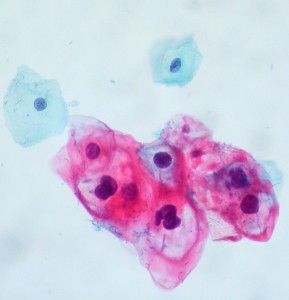
ThinPrep of CIN 1/HPV Photo from Ed Uthman
ThinPrep of CIN 1/HPV
Photo from Ed Uthman

Human papillomaviruses (HPV) are non-enveloped, double-stranded DNA viruses which infect human mucosal and epithelial tissues. They survive well in the environment and can be spread through direct contact with a wart, a fomite (ex. doorknob or toilet seat), or when an infant passes through the birth canal.  HPV is now the most common sexually transmitted infection in the US1. Even though most infections resolve spontaneously without further progression, it can lead to the formation of skin warts and has been associated with cervical cancer since the 1990s. HPV-6 and HPV-11, two types of HPV, are known to cause genital warts and low-grade cervical abnormalities, while HPV-16 and HPV-18 cause about 70% of cervical cancers. Despite the prevalence and potential severity of this viral infection, there is no specific treatment for HPV. Medical intervention involves treating clinical manifestations of the infection, including removal of warts or cervical neoplasias.

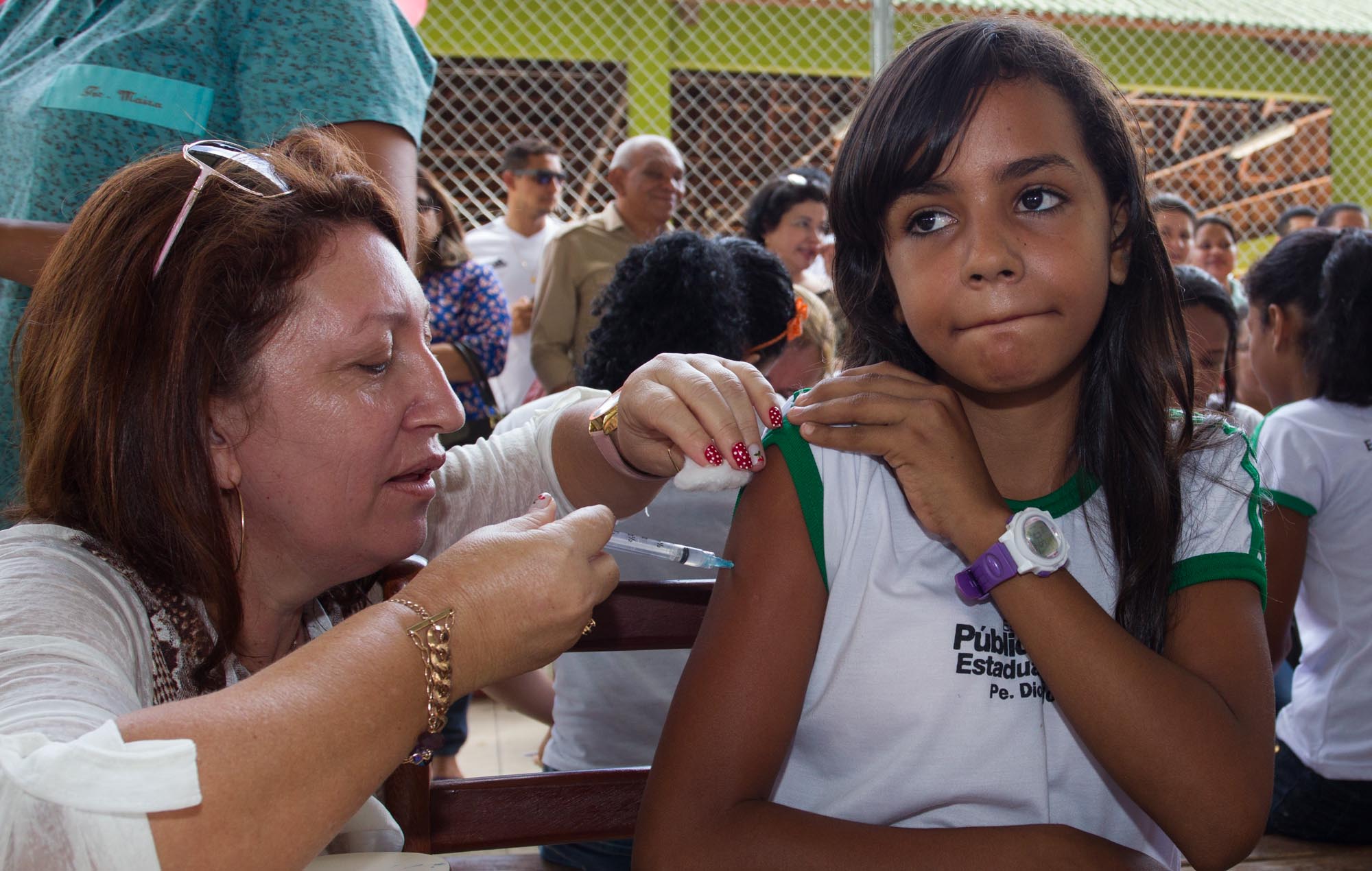
The spread of HPV can be reduced, but not prevented, through the use of condoms and other methods of physical barrier protection. In addition, two new inactivated subunit HPV vaccines, Gardasil and Cervarix, were recently approved by the FDA. The vaccines have no therapeutic effect on those who are already infected and the duration of vaccine protection is unknown, but studies are underway to determine if immunity wanes as time goes by. Both vaccines use the L1 capsid protein, which is produced through recombinant technology. This capsid protein then self-assembles into noninfectious virus-like particles (VLP), which function to elicit a memory immune response.

In 2006, Gardasil, a quadrivalent vaccine (HPV4), was approved by the FDA for both males and females of ages 9 to 26. Gardasil is composed of HPV6, HPV11, HPV 16, and HPV 18 and is administered in a 3 dose course. If a patient has not had all 3 vaccine doses by the age of 26, the remaining rounds can still be administered. HPV4 vaccination is also recommended for all immunocompromised males and men who have sex with men under the age of 26. In 2009, Cervarix, a bivalent vaccine (HPV2) containing HPV 16 and HPV 18, was approved by the FDA. HPV2 is approved for females ages 10 to 25, but is not approved for use in males. Neither HPV4 nor HPV2 contain any preservatives or antibiotics, and more than 99% of those who are vaccinated produce an antibody response to the viral types present in the vaccines.  Prior infection with one of the virus types does not diminish the protection against the other types of HPV present in the vaccine.

The vaccines should not be administered to those who are allergic to any vaccine components, are acutely ill, or pregnant women. If a woman becomes pregnant prior to completing the 3-dose vaccination, the remaining doses should be postponed until the completion of the pregnancy. Side effects of HPV vaccination include pain or swelling at the site of vaccination and fever. Overall, no serious adverse reactions have been documented.

Dr. John Kreider's son and grandson with a historical marker recognizing Dr. Kreider and Dr. Mary K. Howett's work which lead to the development of the HPV vaccination. Photo courtesy of PennStateNews.
Dr. John Kreider’s son and grandson with a historical marker recognizing Dr. Kreider and Dr. Mary K. Howett’s work which lead to the development of the HPV vaccination. Photo courtesy of PennStateNews.

Despite the fact that HPV-16 and HPV-18 are highly associated with cervical cancer, controversy has surrounded the HPV vaccines. In general, parents are understandably reluctant to vaccinate their children against a sexually transmitted infection at such a young age, perhaps because the duration of the protection resulting from vaccination is still unknown. Dr. Diane Harper of the University of Missouri-Kansas City School of Medicine does not believe the vaccine should be mandated by law since only 5% of women infected with HPV develop cervical cancer2. While that seems valid logically, the basic principle of vaccination is to prepare the body’s immune defenses for eliminating virulent agents before they can lead to harmful medical conditions. As an example, consider poliovirus. Poliovirus affects each individual differently, with up to 95% of the total cases being inapparent or asymptomatic3. Only a small percentage of those who are infected with poliovirus get paralytic polio, the condition which was seen in the public eye so often.  Even though infection with poliovirus rarely leads to paralytic polio, parents do not usually hesitate to vaccinate their children in order to prevent this outcome. So, both vaccines prevent a serious outcome which rarely occurs as a byproduct of viral infection, yet polio vaccination has general support around the globe. Despite the fact that the HPV infection doesn’t always result in cervical cancer, parents should not overlook this vaccine, as it drastically reduces the risks of this serious complication even further.

Sources:
1) http://www.cdc.gov/vaccines/pubs/pinkbook/hpv.html
2) http://www.npr.org/2011/09/19/140543977/hpv-vaccine-the-science-behind-the-controversy
3) http://www.cdc.gov/vaccines/pubs/pinkbook/polio.html