
Categories
Clinical Lifestyle Public Health

What’s the Deal with Vaginal Breech Delivery?

Back in May, I attended the 2016 American College of Obstetrics and Gynecology (ACOG) Annual Scientific and Clinical Meeting in Washington, D.C. On my first day, I watched Dr. Annette E. Fineberg, a board certified obstetrician and gynecologist from Sutter Davis Hospital in California, present a short film on upright vaginal breech delivery. The movie featured a woman at term deliver in the operating room by resting on all fours on her hands and knees. She swayed her bottom from side to side in order to promote fetal descent and as a way to cope with pain, as she did not receive an epidural. The baby crowned, bottom first, and then slowly spontaneously delivered its legs, trunk, arms, and finally, head. A successful vaginal breech delivery (VBD)!

Ever since watching that amazing film, I have been interested in reading and talking about VBDs. But on the residency program interview trail, I have begun to notice a trend that some providers seem to have strong, negative attitudes regarding VBDs of singletons. One person even glared and incredulously responded, “No one in the country does those.” I think Dr. Fineberg and the other clinicians I have met that do would disagree.

But I do wonder why providers feel so strongly about a particular position regarding more controversial topics in reproductive health. In regards to vaginal breech delivery, I think that a big prejudice is the absolute horror stories every seasoned OB/GYN has to tell about the time they saw a baby’s head get stuck. These accounts are upsetting, sad, and help explain why someone might think me ridiculous for even asking about training in vaginal breech delivery.

The most common response, though, that I receive is something like, “We don’t do those. But you will probably not find many programs that do since ACOG does not recommend vaginal breech deliveries.” This reply is less emphatic and more accurate if following the 2001 ACOG committee opinion, which states, “planned vaginal delivery of a term singleton breech [is] no longer appropriate.”1 The reasoning in 2001 was largely based on results from the Term Breech Trial, a large, multi-institution, randomized control trial comparing planned vaginal birth with cesarean deliveries for term singletons with breech presentation. This study indicated that neonatal morbidity and mortality significantly increased with vaginal breech versus cesarean section delivery.2

Since the 2000 Term Breech Trial, clinicians have begun to question if vaginal breech deliveries should have a strict ban. Instead, there is evidence suggesting that vaginal delivery is a safe option in select women with breech presentation. The authors of the Term Breech Trial performed two prospective studies in which they examined maternal and child outcomes at both 3 months and 2 years post-partum. At two years post-partum, there was no longer a difference in mortality nor neurodevelopmental delay in the children born by vaginal breech delivery versus cesarean section.3 Retrospective studies with specific protocols similar to those described in the Term Breech Trial have shown excellent neonatal outcomes for vaginal breech delivery of term singletons.4-6 In 2015, Berhan and Haileamlak published a meta-analysis of 27 articles with a total population of 258,953 women comparing the morbidity and mortality of term singleton breech mode of delivery between 1993 and 2014. While the relative risk of perinatal mortality and morbidity was 2-5 times higher in planned vaginal delivery versus cesarean, the absolute risks of several variables, including perinatal mortality (0.3%) and fetal neurologic morbidity (0.7%), were low.7

In the updated committee opinion on vaginal breech delivery published in 2006 and reaffirmed in 2016, ACOG states that “planned vaginal delivery of a term singleton breech fetus may be reasonable under hospital-specific protocol guidelines for both eligibility and labor management.”8 The Royal College of Obstetricians, Royal Australian and New Zealand College of Obstetricians and Gynaecologists, and the Society of Obstetricians and Gynaecologists of Canada report similar recommendations.9-11 According to the ideal candidate for a term, singleton vaginal breech delivery is the following:12-14

  • Frank or complete breech presentation with flexed or neutral head attitude;
  • Estimated fetal weight between 2500 and 4000 grams;
  • A patient willing and comfortable with a trial of labor;
  • Clinically adequate maternal pelvis.

Contraindications to vaginal breech delivery are categorized as a fetal, maternal, or provider factor:12-14

Fetal Factors

  • Incomplete breech;
  • Hyperextended neck;
  • Cord presentation;
  • Fetal growth restriction or macrosomia;
  • Congenital anomaly incompatible with vaginal delivery (e.g. thyroid mass).

Maternal Factors

  • Patient unwilling to attempt/uncomfortable with a trial of labor;
  • Clinically inadequate maternal pelvis;

Provider Factors

  • Lack of operator experience.

Obstetrics governing bodies agree that external cephalic version—whereby a provider uses their hands on the abdomen to rotate the fetus in utero from breech to vertex presentation—should be recommended and attempted first before considering vaginal breech delivery. And all leading sources recommend that an experienced provider needs to be leading the delivery.

But if there are few opportunities in residency to practice vaginal breech delivery, how will there BE any future providers who qualify as experienced?

First and foremost, I hope to enter a residency program that provides me with the training I need to be a competent women’s health provider. But I also intend to seek training in vaginal breech deliveries, whether it is via simulations—which RCOG notes is an appropriate way to build experience 9—or via an elective at another institution where there may be further opportunities. My goal is twofold: (1) offer the best individual options for mode of delivery to my future patients; and (2) help lower cesarean section rates in the United States. Hopefully, I will get the right match!

References

  1. American College of Obstetrics and Gynecology. ACOG Committee Opinion No.340: Mode of Term Singleton Breech Delivery. Obstet Gynecol. 2006 Jul;108(1):235-7.
  2. Hannah ME, Hannah WJ, Hodnett ED, Saigal S, and Willan AR. Planned caesarean section versus planned vaginal birth for breech presentation at term: a randomised multicentre trial. Lancet. 2000;356(9239):1375-1383.
  3. Whyte H, Hanna ME, Saigal S, et al Term Breech Trial Collaborative Group, Outcomes of children at 2 years after planned cesarean birth versus planned vaginal birth for breech presentation at term: the International Randomized Term Breech Trial. Am J Obstet Gynecol. 2004;191:864-871.
  4. Guiliani A, Scholl WM, Basver A, Tamussino KF. Mode of delivery and outcome of 699 term singleton breech deliveries at a single center. Am J Obstet Gynecol. 2002;187:1694-8.
  5. Alarab M, Regan C, O’Connel MP, Keane DP, O’Herlihy C, Foley ME. Singleton vaginal breech delivery at term: still a safe option. Obstet Gynecol 2004;103:407-12.
  6. Borbolla Foster A, Bagust A, Bisits A, Holland M, Welse A. Lessons to be learnt in managing the breech presentation at term: An 11-year single-centre retrospective study. Autralian and New Zeland Journal of Obstetrics and Gynaecology. 2014;54:333-339
  7. Berhan Y, Haileamlak A. The risks of planned vaginal breech delivery versus planned caesarean section for term breech birth: A meta-analysis including observational studies. BJOG 2015: DOI; 10.1111/1471-0528.13524
  8. American College of Obstetrics and Gynecology. ACOG Committee Opinion No.265: Mode of Term Singleton Breech Delivery. Obstet Gynecol. 2001 Dec;98(6):1189-90.
  9. Guideline No 20b: The Management of Breech Presentation. Oxford: RCOG, 2006.
  10. Kotaska AK, Menticoglou S, Gagnon R. SOGC Clinical Practice Guideline No. 226: Vaginal Delivery of Breech Presentation. JOGC. June 2009.
  11. RANZCOG, Cobs-11: Management of the Term Breech Presentation. Melbourne: RANZCOG, 2009.
  12. Hofmeyr JG, Lockwood CJ, Barss VA. Overview of issues related to breech presentation. UpToDate: Accessed 10/11/2016
  13. Hofmeyr JG, Lockwood CJ, Barss VA. Delivery of the fetus in breech presentation. UpToDate: Accessed 10/11/2016
  14. Secter MB, Simpson AN, Gurau D, et al. Learning from Experience: Qualitative Analysis to Develop a Cognitive Task List for Vaginal Breach Deliveries. JOGC 2015

Photo credit: MIKI Yoshihito



Categories
Clinical Narrative Reflection

Red Rash

As I sat in the audience, I stared up at the image being presented on the screen. It was what looked to be another red rash. The content for the Dermatology grand rounds was admittedly beyond my clinical training. Nevertheless, I found it fascinating to slowly discover the complexities of the skin as each case was presented. As I thought about each slide I began to ponder Dermatology as a specialty. I wondered what it meant to be a dermatologist. I briefly reflected on the stereotypes associated with the profession and then realized that every specialty had stereotypes. My brief daydream was interrupted as the next image on the screen appeared. I was anxious to see what it was in hopes that I could identify it, but to my dismay it looked like just another red rash.

Later, as I scurried behind the attending in my official looking, yet noticeably shorter white coat, I wondered what type of red rash I would be observing next. As I entered the exam room the woman sitting there immediately shocked me. Her face read of complete sorrow and hopelessness. However, it was not her face that struck me, it was her skin. It was red, dry, and seemed to be peeling off of her as if she was shedding her skin. It looked terrible and seemed to feel even worse. It was then that I saw the attending spring to life. He began discussing her symptoms with her. When he had gathered the information he needed she began to tell him how the illness has been affecting her life. Skin diseases or issues with the skin can sometimes be viewed or reduced to something inconsequential or unimportant compared to other serious diseases such as diabetes, heart disease, or cancer. However, as I looked at this woman, I imagined her waking up in the morning and standing in front of the mirror and being unable to focus on anything other then this rash covering her entire body. It was then that she described the shame, embarrassment, and humiliation she experienced when others would stare at her, whisper about her, or when she would occasionally catch a glimpse of herself in a store window. The thought of her disease staring at her in the face when she brushed her teeth each morning made other serious illnesses that hide under the skin seem preferable.

After listening to her describe her quality of life it made complete sense as to why she felt so hopeless. It was in the moment that I had a strong desire to help this woman. I wanted to relieve her of this suffering. Fortunately, the attending was already in action. He began to describe his treatment plan while validating every one of her feelings and concerns. It was as if he knew what it was like for her to lose sight of herself and only see her skin. As the sorrow slowly drained from her face, I saw something incredible, hope.

It was then I realized that every slide I causally coined as a “red rash” belonged to actual people who have lives, families, and most importantly feelings. I assigned them a label that they never asked for and most likely hide from everyone they encounter. Assessing and treating the human body is an immense responsibility, but so is connecting with people. Now when I see the images at grand rounds I no longer see a red rash. I see a person who with the proper treatment and compassion can become whole again.


Photo credits:

Featured– Jean-Pierre Dalbéra

In-text- Taylor Thomas

Categories
Clinical Emotion Empathy Narrative Reflection

Takotsubo

Valentine’s Day is not typically kind to medical students. While many couples share flowers and romantic dinners, my fiancé and I looked forward to escaping the hospital just long enough to exchange sweet-nothings over take-out sandwiches. Though lacking in outward displays of affection, this Valentine’s Day was imbued with something different. A few weeks ago, a patient taught me that love, it turns out, can exalt us and confound us, but it can also, literally, break our hearts.

He was a thin man in his late seventies, a mop of unruly gray hair on his head. He came into the emergency room one evening, unable to catch his breath and complaining of severe chest pain. An EKG was rapidly obtained and showed concerning peaks and valleys of electrical activity. Troponin levels were rapidly increasing in his blood. TC, it appeared, was having a heart attack.

Image courtesy of Med Chaos

Though still in the early stages of my medical training, I knew what would come next. In rapid succession, TC would be rushed to the cardiac catheterization lab, and a stent would be placed in his coronary arteries, restoring desperately needed blood flow to his heart. He would recover. His loving wife and adult children would visit him in the hospital. In a few days he would return home.

I was wrong. Try as they might, TC’s doctors were unable to find any blocked arteries in his heart. With nothing to stent open, TC was admitted to the medicine ward for careful observation. Miraculously, his condition stabilized.

The next morning he was feeling better. Not wanting to forego his calisthenics, I found him walking along the bustling hospital corridor, pausing briefly outside each room to greet his fellow patients. As I corralled him back to his room for morning rounds, I couldn’t help but notice the gold wedding ring hanging from a length of frayed twine around his neck. He caught my gaze and smiled, “pretty, isn’t it?”

Lowering himself carefully to his bed, he explained why he no longer wore the ring on his finger. His wife, he lingered on the word, had died almost three months ago. His children, long since grown, had come home for a while, but were now back to their own lives. He’d considered moving into a smaller place—less lonely he figured—but he couldn’t bear the thought of discarding any of her things.

Later that day, TC went for an echocardiogram which immediately revealed his diagnosis.

He had Takotsubo cardiomyopathy, also known as “broken heart syndrome.” It is a rare condition, but strikes most commonly after a period of great emotional turmoil. Marked by chest pain and shortness of breath, the initial presentation is not at all dissimilar to a heart attack, so committed in its mimicry that the EKG and blood findings are often identical.

Although the pathogenesis of Takotsubo cardiomyopathy is not completely understood, it is postulated that adrenaline, released in times of great emotional distress, may overwhelm and eventually damage the heart. With enough damage, the heart breaks, contorting itself into a characteristic shape—wide at the bottom with a distinctively narrow neck. The shape resembles a Japanese takotsubo pot, a vessel historically used to trap octopus.

As a trainee in the field of medicine, my classroom preparation taught me to be objective—to plumb the pertinent facts of a patient’s history and physical exam in order to provide effective treatment. But it is patients like TC who teach me that good doctoring requires something more. Though less tangible, it is clear that one’s physical and emotional well-being are inextricably linked.

Several days later, heart ostensibly healed, TC was ready to return home. He stepped into the elevator, turned, and waved goodbye. A gold ring shone brightly on his finger.

Photo credit: Chandrahadi Junarto


Categories
Clinical Emotion Empathy General Patient-Centered Care

Opinions Aren’t Facts

I wanted to discuss an experience I had in the newborn nursery. I was assigned to Baby K—a small baby girl who was delivered by emergent cesarean section because her mother abused cocaine during her pregnancy. Looking through Baby K’s chart, an unsettling feeling came over me. This was one of the first times I directly saw how a mother’s behavior impacted her child. Before this, all my clerkships had dealt with adults who were responsible for their own health. Seeing an innocent newborn enter this world with a disadvantage because of her mother’s actions was disheartening.

With this in mind, I went to talk to Mother K the next morning. The chart stated Baby K was going to be given to her great-grandmother, and I needed to confirm this information. I could immediately tell that Mother K was upset when I asked her to confirm. She said, “Yes, she’s going to her great-grandma, but I’m still going be involved! I’m NOT giving up on her!” I realized that just asking the question caused her emotional pain. Especially since the social worker, the nurse, and probably several others, had also asked this question. She again assured me that she loved Baby K, but that she just needed to get her life together before she could care of her. After talking more to Mother K, I realized she was trying her best.

This experience opened my eyes to my perception of patients. After browsing Mother K’s chart and reading that she continued to abuse cocaine while pregnant and was planning on giving Baby K to another caretaker, I may have made the assumption that she didn’t want anything to do with Baby K at all. This assumption may have been reflected in the way I asked her questions, leading her to become distraught. Many patients, especially those who suffer from substance abuse, have lost complete control over their actions. Their mind is controlled by an addiction, and they need help before they can take care of others. After talking more with her, I learned that Mother K actually planned to enroll herself in a treatment center that has housing. After getting better, she yearned to resume care of Baby K. These are details that were never mentioned in any notes, but if they had been mentioned, may have altered my first impression of Mother K before I met her. I also learned that Mother K continued to use cocaine during her pregnancy because she didn’t realize its impact on Baby K. She used cocaine during her prior pregnancy with her older son, and he remained “normal and healthy.” Even though we, as medical professionals, can understand how abusing cocaine during pregnancy is directly detrimental to the fetus, many individuals may not understand this basic concept of maternal-fetal physiology. We thought Mother K’s use of cocaine was due to her lack of care for Baby K, when in reality it was fueled by her lack of knowledge.

The most important lesson I learned was not to judge patients based on chart review alone. I know this seems like “common sense,” but it can be easy to jump to certain perceptions after reading the tone of some of the notes in a patient’s chart. My goal in the future is to enter every patient’s room with a blank slate. Our duty has always been to provide the same quality of care for all patients, regardless of their actions or beliefs, but sometimes we let our feelings get in the way of this duty. I have struggled with this in pediatrics more than I have in any other specialty. When I talk to parents who are willing to move mountains for the health of their children, I feel endearment towards them. There is nothing stronger or more special than a parent’s love. In contrast, with parents like Mother K, it is easy to become frustrated. After examining Baby K, I kept thinking about her fragile little arms and small shrunken head. Baby K may grow up to have health consequences that could have easily been prevented. All I can do is allow this experience to shape future patient encounters. I’m going to try to place myself in each parent’s situation and ask myself: what information or advice would I find the most helpful right now? At the end of my time with Mother K, I gave her a tight hug—I’m rooting for her. I hope she is able to complete her treatment and be reunited with Baby K soon.


Photo credit: Weird Beard

Categories
Clinical Emotion Empathy General Patient-Centered Care

Are you a cheerleader or a fan? Examining motivation in medicine

One of my favorite aspects of medicine is the relationship between health and lifestyle. I think of lifestyle as all of the “stuff” that affects patients outside of the exam room, including diet, exercise, family relationships, and living accommodations. All of these things affect the physical body in ways that are not always immediately apparent. In my most recent rotation, my preceptor and I treated several obese women complaining of low back and hip pain.  Thinking about the relationship about weight and musculoskeletal pain, I was surprised that my preceptor never made suggestions to patients about increasing their activity level or improving their diets. “I’ve realized that I’m not a cheerleader,” he told me, when I questioned him. “Trying to make people change only ends in heartache for me.”

It’s difficult to think about how patients can change their lifestyles without first thinking about their motivation for change. January happens to be the perfect time talk about motivation since this is the time of the year when people are making those pesky New Year’s resolutions.  W.D. Falk, a philosopher, writes about motivation as a direct product of one’s morals, and divides motivation into two subtypes: motivational internalism and motivational externalism. Motivational internalists believe that one’s motivation for doing something is directly linked to how the activity in question relates to one’s morals. In other words, if a patient is convinced that exercise is a good, morally correct thing to do, that moral conviction will be enough to motivate them to exercise. On the contrary, motivational externalists see no link between one’s moral convictions and their motivation. No matter how important or morally correct our patients think something is, their motivation for changing their lives has to come from some external source. A patient may believe that exercise is a morally good activity, but this belief alone is not enough to actually motivate them to exercise.

Acknowledging the existence of these two groups (and of course, many shades of grey in between!) will allow us to understand how we may best help our patients without using a “one size fits all” methodology. Some patients may able to find the impetus for change within themselves. These patients may articulate specific plans to achieve a goal or they may have independently improved their own wellbeing in the past. Other patients may need external motivating factors to make changes necessary to improve their health, most often in the form of a trusted confidant. We need to use our best clinical judgment to decide which approach would work better for each patient.

My preceptor’s comments also helped me recognize that in addition to understanding our patients’ capacities for change, we also need to think of our own capacities for motivating our patients. Some physicians are cheerleaders willing to stand on the front lines with their patients. These practitioners feel energized by helping people make positive changes and are willing to make an emotional investment in their patients’ lives. They help their patients set goals, consistently communicate with patients about their progress, and are willing to act as an emotional support whether or not the goals get met. Other physicians may not see themselves as cheerleaders for change. These physicians still have a responsibility to discuss aspects of their patients’ lifestyles that need improvement; however, their role might take form as a “fan” in the stands, rather than a cheerleader on the sidelines. They can still cheer on their patients and check in with them about their lifestyle changes, but may need to help patients find someone else in their healthcare team who is willing to do the ground work that it takes to help patients set and reach goals. In fact, I believe that it is far better to honestly acknowledge that you are a lousy cheerleader than to try to help your patient, only to become disheartened by their lack of progress and abandon them out of sheer frustration before their goal is met. It’s only through an honest acknowledgement of our own abilities and limitations that we can help our patients change their lifestyles for the better.


Photo credit: Jeff Turner

Categories
Clinical General Law Opinion Patient-Centered Care Pharmacology Public Health

Access to Contraception

Contraception is essential to a woman’s health, empowerment, equality, and independence. This belief is championed by the Center for Reproductive Rights, Guttmacher Institute, Planned Parenthood, and others. More importantly, governing bodies of health care overwhelmingly defend access to contraception:

 “Contraception is a pillar in reducing adolescent pregnancy rates.”

  • The American Academy of Pediatrics [1]

 “Clinicians should discuss all contraceptive methods that can be used safely by the patient, regardless of whether a method is available on site and even if the patient is an adolescent or a nulliparous woman.”

  • American Academy of Family Physicians [2]

“The American College of Obstetricians and Gynecologists [ACOG] supports access to comprehensive contraceptive care and contraceptive methods as an integral component of women’s health care and is committed to encouraging and upholding policies and actions that ensure the availability of affordable and accessible contraceptive care and contraceptive methods.”

  • American College of Obstetrics and Gynecology [3]

“Access to safe, voluntary family planning is a human right. Family Planning is central to gender equality and women’s empowerment, and it is a key factor in reducing poverty.”

  • United Nations Population Fund [4]

“This policy supports the universal right to contraception access in the United States and internationally.”

  • American Public Health Association [5]

“Family Planning, an integral component of sexual and reproductive health, is a critical pillar for health and development; it is also a human rights issue…When women are denied their right to and choice of family planning methods, they become trapped in a vicious cycle of poverty, poor health outcomes from ill-timed pregnancies and limited capacity to fully realize their potential.”

  • World Health Organization [6]


Contraception is regarded by the CDC as one of the 10 greatest public health achievements of the 20th century.[7] Of the many reversible contraceptive options available, implant and intrauterine device are most effect, with less than 1% risk of failure for both perfect and typical use compared to an 18% failure rate for typical male condom use.[8] Of course, condoms are the only available contraceptive method that also protects against transmission of infections, including the human immunodeficiency virus (HIV) and human papilloma virus transmission through certain makes of condoms.

Benefits of contraception include: improved health and well-being, reduced global maternal mortality, pregnancy spacing and subsequent health benefits, increased participation of females in the workforce, and economic independence for women.[9]

In the United States, 70% of women ages 15 to 44 years old are sexually active and do not want to become pregnant. Thus, 70% of reproductive aged women are at risk of unintended pregnancy. The Guttmacher Institute, a leading researcher of reproductive health, reported that consistent and correct use of modern contraception (i.e. condom, hormonal contraception, long-acting method, or permanent method) without any gaps in use during all months a woman is sexually active resulted in 68% of sexually active reproductive age women avoiding an unintended pregnancy.[10] These women accounted for only 5% of unintended pregnancies that occurred in 2008. In comparison, 41% of the 3 million unintended pregnancies were a result of inconsistent modern contraceptive use and 54% resulted from nonuse.[10]

Sadly, in addition to other Catholic-based religious organizations, the United States Conference of Catholic Bishops argues that contraception does not prevent unintended pregnancy nor reduce abortion rates.[11] The USCCB also does not believe that contraception is basic health care.[12] Instead, the USCCB states,

 “Contraception is an elective intervention that stops the healthy functioning of healthy women’s reproductive systems. Medically it is infertility, not fertility, that is generally considered a disorder to be treated.”

Let me be clear. Access to contraception is basic health care. 222 million women globally have an unmet need for modern contraception.[4] This burden is highest in vulnerable populations such as adolescents, those from low socioeconomic households, those with HIV, and internally displaced persons.[4]

The WHO issued guidance and recommendations on “Ensuring human rights in the provision of contraceptive information and services,” in which officials outline nine priority actions policy makers and providers need to take to ensure that human rights are protected in the provision of contraceptive information and services.[13] These steps include:

  1. Non-discrimination in provision of contraceptive information and services
  2. Availability of contraceptive information and services
  3. Accessibility of contraceptive information and services
  4. Acceptability of contraceptive information and services
  5. Quality of contraceptive information and services
  6. Informed decision-making
  7. Privacy and confidentiality
  8. Participation
  9. Accountability [of programs that deliver contraceptive information and services]

In regards to current politics and policy proposals, accessibility of contraceptive options includes affordability.

Under the Affordable Care Act (ACA) healthcare law, preventative women’s health services—including well-woman visits; screening for gestational diabetes; human papilloma virus testing; counseling for sexually transmitted diseases; counseling and screening for HIV; contraceptive methods and counseling; breastfeeding support, supplies, and counseling; and screening and counseling for interpersonal and domestic violence—are covered without any co-payment, co-insurance, or deductible.[14] For reference, if the ACA healthcare law were not in place, the average out-of-pocket cost for birth control would be $78-$185 per year.[14] For myself, my oral contraceptive pills cost $30 per month, totaling $360 per year! This was a financial burden as a student—but essential for my overall health—and so, I budgeted. But not everyone has that capability.

The ACA’s expansion of health care coverage and improved access to care also resulted in reductions in delayed care, as well as improved maternal and newborn outcomes. From 2010 to 2014, the proportion of women who reported delaying or forgoing care due to cost concerns dropped by 3.4%.[15] The health care law also funded the Strong Start for Mothers and Newborns Initiative, a collaboration between the Centers for Medicare & Medicaid Services, the Health Resources and Services Administration, and the Administration on Children and Families. The initiative aims to reduce preterm birth rates and improve maternal and newborn health outcomes. This is key because full-term babies have improved outcomes compared to those born in an early, term elective delivery.

The United States Human Health and Services notes that actuaries, insurers, and economists generally estimate that contraception provisions are at least cost-neutral and may, in some cases, result in cost-savings when taking into account the costs and benefits of unplanned pregnancies.[14] In 2009, the UNPF and Guttmacher Institute published a detailed report explaining how family planning and maternal and newborn health services saves lives and money. Preventing and/or postponing unintended pregnancies results in fewer expenses due to the decreased need for maternal and newborn health care and the management of unsafe abortions.[16] In addition, ensuring standards of maternal and newborn health care reduces the rates of complications and subequently incurred high costs.

Keeping these considerations in mind, our current political climate is of great concern because on January 20, 2017, President Donald Trump issued an executive order to repeal the ACA.[17]

I received an email update this week from ACOG reporting that the AAFP, American College of Physicians, AAP, ACOG, and American Osteopathic Association mailed a joint letter representing over 500,000 physicians asking the White House and Congressional leaders to “stand with us and for America’s women” because “healthy women can better participate in our economy and our workforce, and can reach higher levels of educational attainment.” The letter also identifies four priorities moving forward, one of which is to ensure that women have affordable access to evidence-based care.[18]

ACOG’s committee opinion on access to contraception emphasizes full implementation of the ACA requirement that,

“…new and revised private health insurance plans cover all U.S. Food and Drug administration-approved contraceptives without cost-sharing, including non-equivalent options from within one method category (eg. levonorgestrel as well as copper intrauterine devices).” [3]

Throughout the next few months and years when you are voting or exercising your right to debate the very real challenge we face to reduce health care costs, please remember that investing in family planning and maternal and newborn health care services saves money. And remember that leading healthcare organizations—the very governing bodies who set the standards for evidence-based care—strongly advise that the White House and Congress to write healthcare laws that ensure affordable women’s health care and access to contraception. I urge readers to fight for access to contraception, a necessary and significant human right.

For more information about available contraceptive options, please see the “Birth Control (Contraception): Resource  Overview” published by ACOG, available at http://www.acog.org/Womens-Health/Birth-Control-Contraception#Patient.

References

  1. Committee on Adolescence. Policy Statement: Contraception for Adolescents. Pediatrics. 2014
  2. Klein DA, Arnold JJ, and Reese ES. Provision of Contraception: Key Recommendations from the CDC. Am Fam Physician. 2015;91(9): 625-633.
  3. American College of Obstetricians and Gynecologists. Access to contraception. Committee Opinion No. 615. Obstet Gyneco.l 2015;125:250-5.
  4. United Nations Population Fund and Center for Reproductive Rights. Family Planning. Available at: http://www.unfpa.org/family-planning. Accessed November 29, 2015.
  5. American Public Health Association. Universal Access to Contraception; Policy 20153. November 2015. http://www.apha.org/policies-and-advocacy/public-health-policy-statements/policy-database/2015/12/17/09/14/universal-access-to-contraception. Accessed: November 28, 2016.
  6. World Health Organization. Family Planning Summit, 11 July 2012: WHO’s Commitment. Available at: http://www.who.int/reproductivehealth/topics/family_planning/WHO_commitment_fp.pdf?ua=1. Accessed: November 30, 2016.
  7. Sonfield A, Hasstedt K, Kayanaugh MI, Anderson R. The social and economic benefits of women’s ability to determine whether and when to have children. New York (NY) Guttmacher Institute; 2013. Available at: http://www.guttmacher.org/pubs/social-economic-benefits.pdf. Accessed: November 29, 2016.
  8. Guttmacher Institute. Contraceptive Use in the United States. September 2016. Available at: https://www.guttmacher.org/fact-sheet/contraceptive-use-united-states. Accessed: November 29, 2015.
  9. Starbird E, Norton M, and Marcus R. Investing in Family Planning: Key to Achieving the Sustainable Development Goals. Glob Health Sci Pract. 2016;4(2):191-210.
  10. Guttmacher Institute. Infographic: Contraception is highly effective. July 2013. Available at: https://www.guttmacher.org/article/2013/06/infographic-contraception-highly-effective. Accessed: November 28, 2016.
  11. Emergency Contraception Fails to Reduce Unintended Pregnancy and Abortion. Available at: http://www.usccb.org/issues-and-action/human-life-and-dignity/contraception/fact-sheets/emergency-contraception-fails-to-reduce-unintended-pregnancy-abortion.cfm Accessed: February 2, 2017.
  12. Fact Sheet: Contraceptive Mandates. Available at: http://www.usccb.org/issues-and-action/human-life-and-dignity/contraception/fact-sheets/contraceptive-mandates.cfm Accessed: February 2, 2017.
  13. Ensuring human rights in the provision of contraceptive information and services: Guidance and recommendations; 2016. Available at: http://apps.who.int/iris/bitstream/10665/102539/1/9789241506748_eng.pdf?ua=1. Accessed: November 28,2016.
  14. S. Department of Health & Human Services. Fact Sheets: Women and the Affordable Care Act. Available at: https://www.hhs.gov/healthcare/facts-and-features/fact-sheets/women-and-aca/index.html. Accessed: November 28, 2016.
  15. Simmons A, Taylor J, Finegold K, Yabroff R, Gee E, and Chappel A. The Affordable Care Act: Promoting Better Health for Women. ASPE Issue Brief;2016:1-10.
  16. UNFPA and Guttmacher Institute. Adding it Up 2014: The Costs and Benefits of Investing in Sexual and Reproductive Health. UNFPA, Guttmacher Institute. 2016;1-56.
  17. The White House Office of Press Secretary. Executive order minimizing the economic burden of the patient protection and affordable care act pending repeal. Available at: https://www.whitehouse.gov/the-press-office/2017/01/2/executive-order-minimizing-economic-burden-patient-protection-and. Accessed: January 2, 2017.
  18. Healio Family Medicine. AAFP, ACP, others join forces in new effort to protect women’s health. Available at: http://www.healio.com/family-medicine/womens-health/news/online/%7B1b88e282-cd33-402c-a97a-bea5ef45238f%7D/aafp-acp-others-join-forces-in-new-effort-to-protect-womens-health . Accessed: January 2, 2017.

Photo credit:

Blue coat photos

Categories
Emotion Empathy General Narrative

Repost: Stories of Suffering

As the MSPress Executive Board transitions, we bring you a post from past! Enjoy the work of one of our emeritus writers, Sara Rendell.

I am a medical student because I love questions. After a blood vessel takes a punch, what causes the platelet pile-up? What makes people blink, gag, cough, or sneeze? Why is cat litter as scary as alcohol for a pregnant woman?

Some medical questions are unanswered. Yet, science promises progress. With enough grant-funded work in labs and clinics, scientists can describe new diseases. Medicine will show where illness happens, researchers will explain how it happens, and epidemiologists will predict who it is more likely to happen to and when it could happen to them. Even with all of this knowledge, there is one question I do not expect my medical training to answer.

While I go to lectures, practice interview skills, and learn how to diagnose and prescribe, people endure pain, distress, and loss, and I can’t explain why. Why do people suffer?

Photo courtesy of drp

I can look to people who suffer for answers. It is not hard to find written first-person narratives of suffering. In these narratives, protagonists are often cast in two roles: the suffering fighter and the wise sufferer.

As Kathlyn Conway discusses in her essay, “The Cultural Story of Triumph”, the narrative of a “suffering” fighter dominates over other stories of illness. Illness becomes a journey to physical cure. Where physical cure is not possible, illness is cast as a path to wisdom, a form of moral development. The patient becomes a traveler who should somehow be “uncomplaining, strong, and brave” on this journey (Conway, 2007).

“Illness is a chance to show us your guns and triumph!” the medical culture seems to say.

If society expects sick people to be “fighters” what else do we expect from them? I think of S, a 62-year old woman with osteosarcoma, who put on lipstick while her skin was sinking deeper into the spaces between her bones. “Can’t let this cancer make me ugly honey,” she said as she applied her makeup in the mirror. What does it mean that S’s fight against cancer involved cosmetic routines?

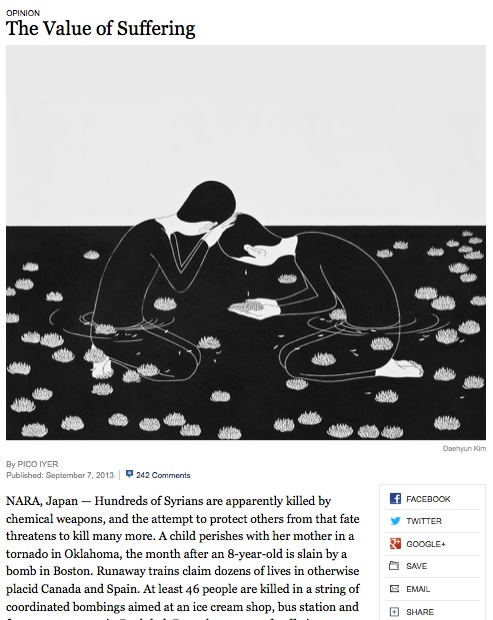
The idea that people grow in strength or wisdom while suffering is familiar to me. As essayist, Pico Iyer describes in “The Value of Suffering”, suffering can be a doorway to compassion, loss can be an invitation to appreciate nuance. Yet, my intestines tangle when I imagine telling a patient who suffers, “What an opportunity to unfurl in wisdom!” Even if I did not say this out loud, I wonder what my expectations might communicate.

Untitled 2 copyLast year, my close friend J died of metastatic breast cancer while 27 weeks pregnant with a boy. During her first trimester, we would lie on my floor and look up at the ceiling when retching woke her in the morning. Over the next few months we went to her prenatal visits and giggled over possible baby names. Then, she stopped eating and her nails turned yellow. Her doctor said, “Hopefully it’s hepatitis.” He didn’t bother to tell us what it hopefully wasn’t. Her yellow vomit and “liver nodules” explained. She was 24 years old when she passed away and left behind her husband and 3-year old son.

That was an inexplicable catastrophe. But J’s husband needed to believe that somehow God had planned this. If he believed that her death was one example of many forces that roll over us the way tires would ants trying to cross a highway, then how could he continue with day-to-day life? How would he keep being his son’s Papa?

Even after I gather years of experience with suffering, I do not expect to be able to explain it. I do know that the stories we tell about suffering can influence how we relate to patients.

My expectations form the questions I ask and the things I attend to.  Imagine me telling a patient, “Fight your cancer, but stay pretty.  Also, grow spiritually so you can teach me through your suffering.”  That feels like a lot of pressure to put on someone who is ill, even if it is unspoken. If I look for a suffering fighter in a patient who cannot cast herself in that role, I risk disrespecting her experience. If I try to learn wisdom from a patient who does not see his illness as a journey to moral development, I might disregard his life story.

Medical school teaches me to synthesize and simplify information.  The more narratives I hear, the more I feel a desire to string them together along a unifying theme.  Cultivating attention to less common stories about suffering and loss reminds me to listen when I long to explain.

Sources:
Conway, Kathlyn. 2007. Beyond Words: Illness and the Limits of Expression. University of New Mexico Press. Albuquerque

Iyer, Pico. 2013. The Value of Suffering. New York Times.
Featured image:
“After a Night Shift” by Stephanie Scott

Categories
General Narrative Patient-Centered Care

Lunch Chats

It’s 6:30 AM. I have one hour to see four patients before morning rounds. This seems like ample time, and it is—it just isn’t the best time. My patients are still sleepy. They aren’t in the mood to listen to me talk about meal planning or exercise regimens (at the crack of dawn, I wouldn’t be either). Each morning, I wake my patients up, ask them pertinent questions, and perform a focused physical exam. Then, I let them get back to sleep. Yes, I would see them again during morning rounds, but no, seeing them twice is not enough. I realized early in my clinical education that if I really want to make a difference, I need to visit my patients after lunch.

I was motivated to visit my patients in the afternoon after hearing the following wise words from one of my attendings: “the patient you see at 7:00 AM is very different from the one you see at noon.”

In the morning, sometimes as early as 6:00 AM, patients are sleepy. It’s much harder to engage them in conversation. In the middle of the day, after they’ve eaten lunch, they are often looking for an engaging visitor.

When I started third year, I wanted to heal every issue on my patients’ problem lists. Inpatient medicine is driven by a patient’s “chief complaint,” and the management of long-term health issues is left for follow-up with a primary care provider. This is a practical system, but it is still unsettling. I was never convinced that Ms. B, who came in with a toe ulcer, would continue to manage her diabetes with a “low carbohydrate diet” and regular glucose checks.

When Ms. B was on my team’s service a few months ago, our daily visits to her room generally entailed checking the status of her toe. She received accuchecks every four hours, and her blood sugars were generally well-controlled, but would she really continue to eat this healthy at home? I wanted to find out. After I started visiting Ms. B multiple times a day, I learned so much more about her health obstacles. I learned that she often starved herself the entire day and binged on one “feast” at night. She thought she was being healthy by only eating one meal! I explained that her eating pattern was messing with her body’s metabolism, and I gave her a presentation I had made a few years ago about affordable healthy food choices available at the local supermarket.

Attendings and residents work extremely hard, and they don’t often have enough time to sit with every patient and discuss life choices. As a medical student, I have this time. I’ll never know if Ms. B implemented my suggestions, but I do know she left the hospital with more than a healed toe. Since then, I’ve been visiting my patients after lunch…I’m always surprised by how much I learn.


Photo courtesy of Am Kaiser

Categories
General MSPress Announcements

New Year Wishes, 2016 Blog Highlights

Wishing all of our readers and supporters a new year blessed with good health, fulfillment, and joy. Thank you to all of those toiling as healthcare workers and defending the right of the pursuit of health for all. May this year be filled with teamwork and  innovation within medicine all towards the goal of alleviating human suffering and illness.

This year, the MSPress continued to enrich medical student dialogue with our various publications.  

Here are my favorite blog pieces from 2016:

The Doctor as the Advocate by Gunjan Sharma

Meaningful Community Involvement by Roy Collins

The Policy on Policy: Why Medical Students Need to Learn About Healthcare by Leigh Goodrich

Thank You for Being a Patient: A Reflection on Gratitude and Its Place in Medicine by Jordan Metsky

Frankenstein: A Tale for the Modern Age by Gunjan Sharma

Storytelling and Patient Advocacy by Ashley Franklin

A Farewell to Oliver Sacks by Josip Borovac

Other highlights include:

The MSPress Journal, Vol 3

The Free Clinic Research Collective, Vol 2

The Medical Commencement Archive, Vol 3

As a final plug, remember that the deadline to submit application to join the executive MSPress board is Jan 30th.


Cheers!

Categories
General MSPress Announcements

Call for MSPress Team Member Applications!

The MSPress Call for Applications 
Executive Team applications due by Dec 30th. These roles include: 
  • Executive Editor (in line to become Editor-in-Chief)
  • Medical Commencement Archive Associate Editor
  • Free Clinic Research Collective Associate Editor
  • MSPress Journal Associate Editor
  • MSPress Blog Associate Editor & Copy Editor
General Team applications accepted on a rolling basis. These roles include:
  • Editor
  • Blogger
  • Peer Reviewer
VISIT THE MSPRESS TEAM APPLICATION HERE: http://themspress.org/team-application.html