Categories
General Pharmacology

A Quick Lesson in Supplement Quality

An increasing number of patients are now taking nutritional supplements on a daily basis, believing that they are boosting their health. Choosing the best supplements to take can be nothing short of overwhelming for the majority of patients. It’s not only a question of supplement type, but also of knowing how to identify which product is safest and most effective.  As more patients are taking their health into their own hands, vitamin sales are expected to grow by 8% to a total of $9.2 billion over the next year, according to Nutrition Business Journal.1

It is important for patients to be aware that the U.S. Food and Drug Administration (FDA) does not analyze the content of dietary supplements. However, the FDA has issued Good Manufacturing Practices (GMPs) for dietary supplements. These are a set of requirements and expectations by which dietary supplements must be manufactured, prepared, and stored in order to ensure quality. One of the best ways to know if a supplement contains what the label says it does is to choose a product that has been manufactured at a GMP facility. The GMPs are in place to prevent the inclusion of the wrong ingredients, the addition of too much or too little of an ingredient, contamination (i.e. by pesticides, heavy metals, bacteria, etc.), and the improper packaging and labeling of a product. A GMP facility must comply with the same standards required of pharmaceutical companies, as mandated by the FDA.2

Additionally, it is best if the supplement manufacturer has a Certificate of Analysis (COA) for each ingredient. Having a COA means that the raw material has been tested by an independent lab and determined to be contaminant-free.

Another sign of high supplement quality is for a product to be National Sanitation Foundation (NSF) certified. NSF is a respected third-party quality assurance organization. It verifies that a facility complies with GMPs and takes proper steps to ensure product safety and accurate labeling.

There are four “grades” of supplements/vitamins:3

  1. Pharmaceutical grade –The highest-quality grade, typically sold by a health care provider and may require a prescription.
  1. Medical grade – Still good quality but not as high as pharmaceutical grade.
  1. Cosmetic or nutritional grade (“consumer grade”) – Mostly “over-the-counter” products sold through health stores, pharmacies and grocery stores. Consumer-grade supplements are optimized for extended shelf life.
  1. Feed or agriculture grade – Not recommended for human consumption.

One good resource is the Dietary Supplement Label Database (DSLD). This site contains label information from thousands of dietary supplement products available in the U.S. It can be used to search for a specific ingredient in a product, a particular supplement manufacturer, text on a label, or a specific health-related claim.

Patients and doctors alike want to know whether a supplement has been clinically proven to support health. In general, it is a good idea to encourage patients to check with a healthcare provider before taking nutritional supplements. Dietary supplements may not be risk-free under certain circumstances, such as during pregnancy or for those who have a chronic medical condition.

Although this piece is about supplements, it is important to keep in mind that we all can benefit from improving our diets naturally, rather than by adding pills and powders. Supplements can be beneficial, but should not be used to replace a well-balanced, healthy diet.

References:

  1. “Nutrition Business Journal.” New Hope. http://newhope.com/nutrition-business-journal
  1. “Office of Dietary Supplements – Frequently Asked Questions (FAQ).”Frequently Asked Questions (FAQ). https://ods.od.nih.gov/Health_Information/ODS_Frequently_Asked_Questions.aspx
  1. “Fool-proof: How to Choose the Best Quality Supplements/vitamins.” Virginian-Pilot. http://pilotonline.com/life/fitness/quick-tips-for-wellness/fool-proof-how-to-choose-the-best-quality-supplements-vitamins/article_353a05ec-a4ed-5b6e-a3f7-01f14cd7bbd6.html


Featured Image:
Pills by Jamie

Categories
Empathy

Properly Unprepared

It was late afternoon, and the current nursing shift would be relieved in less than ninety minutes. The feeling of impending Friday freedom was palpable on the floor of the intensive care unit. I was on my way to meet with my last patient of the week, who had been brought in for an unintentional drug overdose. My goal was to determine whether the overdose was truly accidental, and if she was a candidate for compulsory psychiatric hospitalization. I passed by a large bank of computers without stopping, and knocked on the patient’s door. When I walked in that room, all I knew was the patient’s name, her age, and the reason for her hospitalization. Other than those preliminary facts, she was a complete mystery to me. I spent fifty minutes with the patient, and had a relatively pleasant conversation. When I walked out of her room, I opened her medical chart for the first time.

Unfortunately, that day, the story that I received from the patient and the information that I got from her chart told two different stories. Numerous providers had noted that she was irresponsible with medications, and I got the sense from the chart that she only sought medical care to gain access to controlled substances. Now that I had established a good relationship with my patient, I would have to re-interview her in an attempt to reconcile the information I had seen in her chart with the picture she had painted for me in the moments prior. My Friday freedom would just have to wait.

I would not be surprised to find out that the ICU staff was laughing at me that day. After all, I ended up spending more than two hours with this patient when I could have conducted only one brief interview. Even though the majority of my first hour with the patient was pure confabulation, I viewed it as a valuable component of my assessment. That first hour represented my sole opportunity to get to know my patient without any bias. Had I looked at her chart before walking into the room, I unquestionably would have written her off as an irresponsible, drug-seeking troublemaker. I would have asked her pointed, perhaps accusatory questions about her behaviors, and worse, I would have known exactly when she was lying to me, further eroding any respect I may have had for this patient.

Electronic medical record systems help to facilitate the sequestration of large amounts of information about our patients with minimal effort, and it’s largely considered taboo to meet with patients without first researching their medical record.  The information physicians can learn from the medical record can be undoubtedly beneficial in many situations, but extensive chart reviews can also lure us into a false sense of security, allowing us to preconceive an identity for our patients before ever having met them.

Had I read my patient’s chart that afternoon, I am certain that I would have made judgments about her that would have influenced my interview. Instead, I learned about my patient by allowing her to tell her own story. I thought about the information she shared with me, and, perhaps more importantly, what she failed to tell me. Because the patient never discussed her well-documented mishandling and possible dependence on prescription medications, I felt confident in making an assessment that this patient had relatively poor insight about her problems.

Featured image:
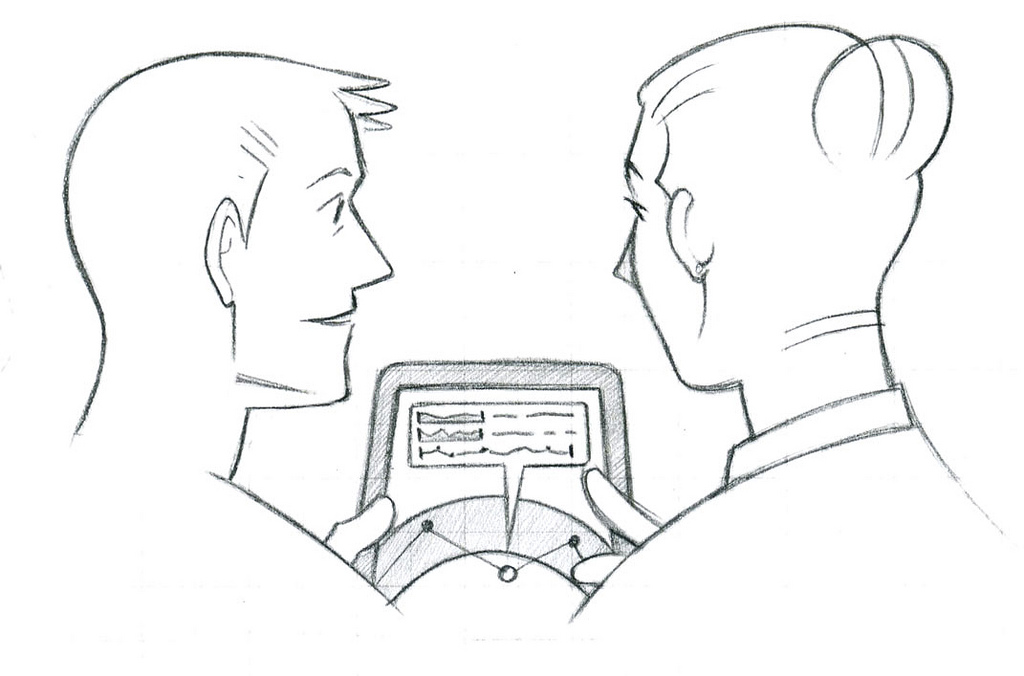
hGraph: patient + clinician looking together by Juhan Sonin

Categories
Empathy Humanistic Psychology Patient-Centered Care Psychology Reflection

Applying Humanistic Psychology to Medical Practice

“People are just as wonderful as sunsets if you let them be. When I look at a sunset, I don’t find myself saying, ‘Soften the orange a bit on the right hand corner.’ I don’t try to control a sunset. I watch with awe as it unfolds.” –Carl Rogers1

We as human beings love categories. We enjoy dividing the body into its constituents, from the bones to the muscles to the skin, from the heart to the vessels to the blood cells. The more we can break something down, the more we can dissect it, understand it and build from it. It can be argued that this method of reductionism is what has led to many of the insights of the present day. It is by becoming so specialized within one area that one is able to build upon one’s expertise and develop novel ideas.

This method of classification, however, cannot be used to explain everything around us. While insightful in some areas, it can be destructive in others; namely, the human mind.

Look back at the history of Psychology and we see ourselves jumping through the same hoops of categorization, attempting to reduce our inner worlds into hierarchies and models. From the psychodynamic theories of Freud to the behavioristic perspectives popularized by Pavlov and Skinner, we are led to believe that if we can merely slice apart the human mind into chunk-sized pieces, perhaps we can gain insights into humanity itself.

But unlike the heart or the lungs, the way we choose to see a particular human mind can have profound effects upon that person. Tell someone that they are a mess of electrical impulses and chemicals, and they may see themselves and the world around them far differently than a person who believes that it is they themselves who have control over their lives.

There is a reason Psychology and Psychiatry garner so much criticism from the general public in a way that no other specialty does.  There is a reason that an anti-psychiatry movement exists, but there are no anti-surgery or anti-cardiology movements. It is because these theories, these categories, have an impact on how we see ourselves. They touch upon what it means to be human.

The argument I wish to propound is to urge us all to go beyond these categorizations, be they biomedical, psychological or social, and to take a more holistic approach, which I believe can best be viewed through the lens of Humanistic Psychology.

What is Humanistic Psychology?

Humanistic Psychology arose in response to the more mechanistic views of human behaviour that were gaining popularity in the 1950s2. Rather than focusing on one aspect of a person, be it our childhoods or our innate animalistic needs, Humanistic Psychology proposes that what is important is how the person themselves experiences the world around them. The human being is central. It is not the objective measurement of chemicals, electrophysiology or set questionnaires that lies at the heart of humanity, but how we think and feel.3

There are many contributors to the Humanistic canon, but I wish to focus on just one aspect of it: Carl Rodgers’ person-centered therapy. Although the word “therapy” implies a form of treatment for those with mental health problems, I wish to apply these principles to the arena of healthcare as a whole. I believe the therapeutic relationship between therapist and client can teach us much about our own relationships with patients within hospitals, emergency rooms and clinics.

Person-centered therapy is built upon three principles4:

  1. Congruency
  2. Unconditional Positive Regard
  3. Empathy

I will go through each of these in turn and focus on how they can transform our relationships with our patients.

Congruency

Congruency refers to genuineness, that is, displaying ‘your actual self’4 when dealing with a patient. This involves letting go of one’s mask and revealing one’s true feelings as they come and go. It requires a level of self-awareness, which allows us to fully experience the moment instead of remaining walled-off from our true inner state.

Do not think of yourself just as a doctor, a medical student or a healthcare professional. Undoubtedly there are professional boundaries that must always be maintained, and a profession that you represent every day. But be careful that you do not let this professional façade get in the way of your relationship with your patients. Remember that you are only human and the last thing a sick patient needs is a robot. By displaying an open and trusting character, you give your patient the opportunity to relax, to feel at ease and to be open about what is truly troubling them.

Congruency takes us back to our humanity, reminding us that there is little difference between ourselves and the patient sitting opposite. If we can come to terms with our own thoughts and emotions as we deal with the chaos that occurs in the world of healthcare, then we will be able to display a level of respect and understanding that will allow our patients to appreciate that they are speaking to a human being and not just a title.

Unconditional Positive Regard

Unconditional Positive Regard refers to the belief that people should be accepted as they are. For the professional, it involves displaying a non-judgmental attitude that is provided unconditionally, i.e. without limitations or expectations.

Although this is a concept well known to most of us, it can be difficult to put into practice. We all have our prejudices and our own rigid lines that we draw across our horizons. The expectation is not to get rid of all prejudice, but to be aware of how they impact our behaviour towards others.

Do we at times place blame on our patients?
Does our heart sink when we go to speak to certain people?
Do we have certain beliefs about people based on their clothing, their lifestyle, or their occupation?

Of course we do. Think back to a time when any of these thoughts have come to your mind and think about their effects. It may not necessarily mean that you throw everything in the air and scream your prejudices out loud. But it does mean that the way you regard your patient may be subtly altered; you may show less enthusiasm towards certain patients or display less sympathy than you would for someone else. It is by being aware of these little discrepancies that will make us all better clinicians.

Undoubtedly, healthcare places us all into positions where we come face-to-face with lifestyles that we disagree with and behaviours that we feel uncomfortable around. The idea is to go beyond these actions and see the human being lying beneath the layers. We must accept them as they are, and may be surprised to find that the patient responds with gratefulness at being treated as an equal.

Empathy

Perhaps the term most popular out of the three, empathy refers to the ability to understand what the other person is feeling. It involves having an understanding of the other person’s beliefs and values, and being cognizant of why they care about the issues that are important to them – in other words, it involves fully stepping inside another person’s private world.

Within healthcare, it is important that we do not go through a list of tick boxes and forget that our versions of events are not the same as theirs. All too often we may accept simple words such as ‘I’m frightened’ with a mere nod of the head and a simple smile on our faces without digging deeper and asking, ‘What is it you are frightened of?’ Our job does not merely consist of diagnosis and treatment, but of going further into our patients’ lives and understanding what their illnesses mean to them. What it means for them to be in hospital, to be a patient, to lose their role as a parent or a provider. Without this aspect, we may well cure a disease with our drugs and our technology, but we will never get to the heart of the matter.

What does it all mean?

These are all terms that most of us are familiar with. They are words we may write time and again upon reflection, sayings that we repeat year after year during our interviews. But the idea is to put this into practice, which can only happen if we first take a step back and think about the times when perhaps these three concepts were not fulfilled. Those times when the relationship broke down, when the patient closed up, when we walked out of the consulting room thinking that could have gone better.

Remember that patients do not always come to us with a collapsed lung or a broken rib. They come to us as a whole. The idea behind Humanistic Psychology is to go beyond the reductionist theories that focused on one aspect of a person’s being, and to appreciate the totality of human experience.

Why do I think these three concepts are important? Because I believe these are concepts that make all of us much better clinicians, and ultimately much better people. I believe that almost all of the problems we face within healthcare, and indeed outside of it, revolve around our ability to relate to others. How differently would we act if we could truly see through the eyes of the person sitting next to us, feel their pain and suffering, think their thoughts as they swirl between their children, their loved ones, their aims and their worries? These concepts, although integral to person-centered therapy, transcend the therapist’s room and can be practiced in every dialogue across every hospital and by every person, including you and I.

“In my early professional years I was asking the question: How can I treat, or cure, or change this person? Now I would phrase the question in this way: How can I provide a relationship which this person may use for his own personal growth?” –Carl Rogers6

References

  1. Culture of Empathy. Carl Rogers Empathy Quotes. [Accessed: 28th May 2016]. Available from: http://cultureofempathy.com/references/Experts/Carl-Rogers-Quotes.htm [Accessed: 27th May 2016]
  2. com. Humanistic Approach in Psychology: Definition & History. [Accessed: 29th May 2016]. Available from: http://study.com/academy/lesson/humanistic-approach-in-psychology-definition-lesson-quiz.html
  3. McLeod, S. Humanism; 2007. [Accessed: 27th May 2016]. Available from: http://www.simplypsychology.org/humanistic.html
  4. McLeod, S. Person Centered Therapy [Online]; 2008. [Accessed: 27th May 2016]. Available from: http://www.simplypsychology.org/client-centred-therapy.html
  5. Gillon, E. A Person-Centred Theory of Psychological Therapy. In: Person-Centred Counselling Psychology: An Introduction. SAGE Publications Ltd; 2007. p.43-67.
  6. BrainyQuote. Carl Rogers Quotes. [Accessed: 28th May 2016]. Available from:                          http://www.brainyquote.com/quotes/quotes/c/carlrogers202206.html

Featured image:
Genetic inheritance by Patrik Nygren

Categories
Clinical Narrative

Why I Stand with Planned Parenthood

After writing “ Storytelling and Patient Advocacy,” I cuddled up to a cup of warm coffee and reflected on the various moments in my life that inspired me or motivated me to take action. I thought about my story; why I applied to medical school and why I have certain research interests. Then I asked why I want to improve access to and the quality of reproductive health care. Immediately I thought about the question friends and family frequently ask me: “Why would you support Planned Parenthood if you want to help women?” My answer is this story:

As a third year medical student who will soon be applying to an obstetrics and gynecology residency, I am afraid.  The recent violence in my community and continued aggression against Planned Parenthood suggests that aligning oneself with the organization is risky.  Becoming an obstetrician gynecologist (OB/GYN) has been my dream since elementary school, so I feel anxious when family members share concerns that publicly supporting Planned Parenthood ensures I will not match to an OB/GYN program.  Will standing with Planned Parenthood keep me out of a program?  Is it OK to discuss abortion training on a residency interview?  Or do I need to use code like, “What family planning training opportunities are available?”  And in light of the attack on the clinic in Colorado, is my life in danger?  A pro-reproductive rights provider and avid supporter of Planned Parenthood wrote to me, stating that she is afraid to rotate at their clinics for fear of an attack.  She hauntingly added, “The terrorism is working.”  I almost never employ self-censorship, yet I too hesitated to continue to develop a professional relationship with Planned Parenthood.  Even scarier is to discuss that affiliation publicly.  A friend reminded me that in times of confusion or fear, it is best to have a mantra that can elicit courage.  My inner voice reminds me, “Be a rock star woman.”

A couple years ago, after my reproductive and endocrinology module, and after being influenced by readings about sexually transmitted disease (STD) pathology, I requested a full STD screen during my annual well-woman exam. The nurse told me, “We don’t do that here. You’ll have to go somewhere like Planned Parenthood.”  I left embarrassed and did not follow-up with another clinic.  Enter my third year clerkships when, on a pediatric service, my team treated a 15 year old female who was 21 weeks pregnant presenting with “vaginal pain and fainting during sex.”  I was ecstatic to finally manage an obstetrics (OB) case, and I excitedly took a medical history.  While writing my notes, I overheard a group of nurses say that this girl would not have “gotten herself pregnant” if she knew how to use a condom.  I interjected that the American College of Obstetrics and Gynecology now recommends long-acting intrauterine devices (IUDs) as the leading contraceptive option for adolescents because it is the most effective, safe, private, and does not rely on user consistency (ACOG, 2012).  Three nurses and a resident mistakenly retorted that IUDs cannot be given to adolescents or females who have not been pregnant due to increased risks to the uterus.  Because an intrauterine device is placed inside of the uterus during an office pelvic exam and contains a small string that trails into the vagina, old theories warned about uterine perforation, pelvic inflammatory disease (PID), and subsequent infertility.  They are wrong.  There are no cases of infertility following IUD use, no increased absolute risks for PID, and minimal incidence of uterine perforation (ACOG, 2012; ARHP, 2015).  Shockingly, this has been known in the medical community for more than a decade, yet there continues to be widespread ignorance about it among healthcare professionals.

I observed a similar case during a later clinical experience.  I listened to the physician refuse an IUD to a young woman with a history of unintended pregnancies based on his belief that adolescents are promiscuous and will develop pelvic infections.  His words, “We don’t offer those here.  You’ll have to go somewhere else like Planned Parenthood.”  Do you see the pattern?  It is no secret that judgement, ignorance, and prejudice exist in healthcare.   What is a medical student to do when faced with blatant disregard for clinical guidelines and scientific evidence that has been undisputed by science for over a decade?  I decided to contribute to the advancement of research and education by volunteering with Planned Parenthood, an organization that provides safe, up-to-date, and judgement-free care.

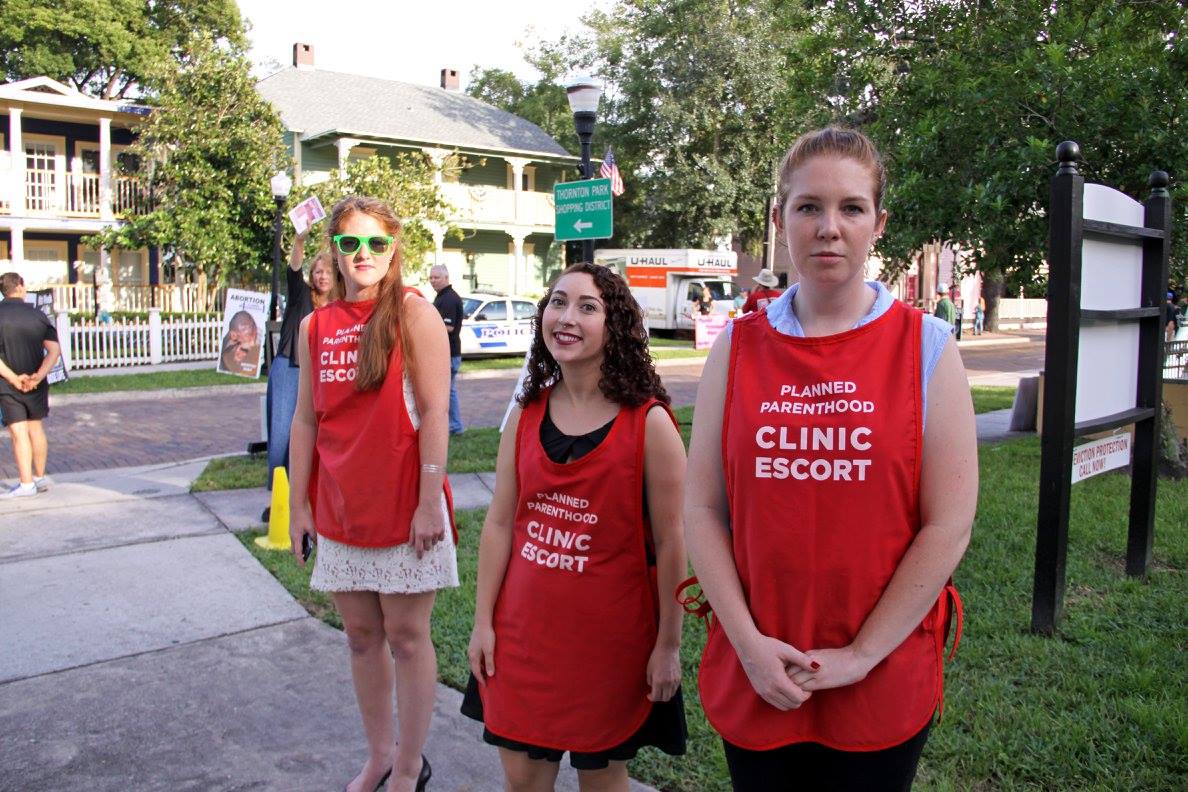
I regularly volunteer at Planned Parenthood as a patient escort, walking patients from their vehicles to the clinic doors.  Let me set the scene.  My local office is visited by anywhere from three to more than twenty protestors daily.  They stand on the sidewalk mostly shouting and waving signs at passing cars.  A few people silently pray with a rosary.  The first time I arrived, I had to excuse myself to the restroom because the hateful screams of “Baby killer with blood all over your hands!” were too shocking for me to bear.  Eventually I became better equipped to disregard protestors. However, that took time, and if I, a student medical provider, was mortified when my gynecologist’s office told me to go to Planned Parenthood for a standard STD screen, can you imagine the emotions a young patient experiences when walking from their car at a Planned Parenthood clinic, listening to protestors scream?  So I stand for hours in front of a Planned Parenthood clinic, deflecting the endless onslaught of insulting remarks, in the hopes that people can feel a little more secure receiving an STD screen, a pap smear, an IUD placement, or yes, an abortion.

The fact remains that Planned Parenthood is a leading provider of reproductive health care services.  A central focus is prevention, encompassing STD and cancer screening as well as contraception.  They provide prenatal services and references for those choosing to pursue adoption, in addition to abortion services and other reproductive health care.  The Guttmacher Institute, another source of global sexual and reproductive health, reported in July 2015 that half of all pregnancies each year (greater than 3 million) are unintended; the same statistic that has existed for two decades (Guttmacher, 2015).  More than half of women of reproductive age (13-44 years old; 38 million) need contraceptive services, and 20 million of those women require publicly funded services and supplies.  In addition, the average Planned Parenthood health center serves significantly more women seeking contraceptive services than all other publicly-funded safety-net clinics.

An interview on Fresh Air with Jonathan Eig, author of The Birth of the Pill: How Four Crusaders Reinvented Sex and Launched a Revolution, made me think more about Planned Parenthood’s role in women’s health care.  In the book he describes the challenges scientists and Margaret Sanger faced when trying to develop a “magic pill that would allow women to control when and if they got pregnant”—Wouldn’t that be great?  Oh wait, we thankfully have that now in pill, patch, injection, implant, and intrauterine device forms.  The developers of the pill studied progesterone’s effect on inhibiting ovulation under the guise that they were studying infertility treatment.  I wonder if the current, hostile climate surrounding Planned Parenthood will later be compared to the ludicrousness of 1950s-era United States, when our country outlawed female contraception, while allowing men to easily purchase condoms.  When I learn about the backlash surrounding the development of birth control, arguably the most important invention of the 20th century, how could I let threats prevent me from supporting an organization that is one of the few to consistently provide safe and evidence-based services without judgement?  The answer is, I cannot.  My career goal is to help women access and achieve the best reproductive care.  That is why I stand with Planned Parenthood.

References:

American College of Obstetrics & Gynecology. (2012). ACOG committee opinion no. 539: Adolescents and Long-Acting Reversible Contraception: Implants and Intrauterine Devices. Obstet Gynecol. 117(6):1472-83.

Association of Reproductive Health Professionals (2015). The Facts About Intrauterine Contraception [Fact Sheet]. Retrieved from http://www.arhp.org/Publications-and-Resources/Clinical-Fact-Sheets/The-Facts-About-Intrauterine-Contraception-

Guttmacher Institute. (2015). Publicly Funded Family Planning Services in the United States [Fact Sheet]. Retrieved from http://www.guttmacher.org/pubs/fb_contraceptive_serv.html

Featured image:
Me (far left) escorting guests to the annual Planned Parenthood of Southwest and Central Florida Fundraising Gala.

Categories
General Narrative Public Health

Storytelling and Patient Advocacy

Yesterday, I received a perfectly-timed message on a group thread. My friend wrote that she loves patient advocacy.

“Me too,” I thought, as I filed away notes from a Planned Parenthood of Southwest and Central Florida Meeting hosted by the Leadership Action Team (LAT). What was the purpose of that meeting? To train volunteers on how to employ storytelling in their advocacy work. Planned Parenthood trains all of its staff members, and now volunteers, in the “Story of Self” curriculum created by Get Storied® , which is a program designed to teach businesses how to create social change through the art of storytelling.

The meeting began with introductions and a moment to safely process the recent shooting in our hometown. A young volunteer explained how the event affected her and her family:

I learned about the shooting on Facebook…And honestly, all I saw was, ‘Massive Shooting,’ and thought, ‘Oh, another shooting,’ and kept scrolling. I didn’t understand the gravity of the situation, until that night while watching the news with my mom. I looked over at my mom and she was crying. She just said, ‘I am afraid for you.’ She’s never before expressed concern about my activities. But now she says, ’I am afraid for you.’

This volunteer was young, but her voice carried a surprising amount of assuredness. I felt her confusion and fear. The next attendee shared their story, and then the next, and so forth as the meeting progressed.

We learned that there are three key components to one’s story of self: a challenge, a choice, and an outcome. Zac, the chair of the LAT, shared his story of self, which described the healthy relationship with his mother and the openness with which she educated him regarding sexual matters when he was an adolescent male. The two-to-three-minute story, complete with a joke about educational materials containing graphic penis pictures, ended powerfully with the line,

When I walk into a Planned Parenthood, it’s the same kind of environment my mom created for me for talking about sex.

We received our first assignment, which was to reflect on the experiences in our lives that have shaped the values which call us to leadership. The program will later have us refine the various details of our stories, practice in one-on-one and group sessions, identify ways in which we plan to use storytelling in our advocacy work, and take action. We had five minutes to silently reflect.

Ok, what is my campaign? Women’s health. Yeah, but what specifically? To help women access and achieve the best reproductive health care possible. Nice. So why do you want to do that? Because reproductive health is the most important thing in the world! Ok, but why?

Figures of maternal morbidity and mortality popped into my head. I could see again the absence of a clitoris and labia in my Nigerian patient who underwent female genital mutilation as a young girl. I remembered the way the vaginal introitus feels beneath my hands—stretched and strong—as a baby’s head begins to crown. The voice of an adolescent girl echoed, “I mean I want to have sex, but like, I’m not a slut.”

It is easy for me to think of patient stories that depict why I am pursuing a career in Obstetrics and Gynecology. But a story of self is just that. A story of SELF. I struggled to think of inspiring personal experiences.

Time is up! No.

Each person in my small group shared their story and received feedback. My turn circled around and I rambled on about women’s health. I managed to state two strong lines, “I volunteer at Planned Parenthood because it still remains the one place to offer judgement-free care. Not even my own gynecologist can say that.” But my story lacked focus and a compelling personal example.

That night after receiving my friend’s text, I began to think more about the meaning of patient advocacy. As a medical student, I think my primary role in patient advocacy is to ensure that my medical team knows about our patients’ health histories and needs. During my internal medicine/family medicine clerkship, in order to help care for a patient, I compiled a short document of excerpts from the World Health Organization, Centers for Disease Control, and American College of Obstetrics and Gynecology regarding HIV prophylaxis treatment in pregnant women with negative HIV status who have regular, unprotected sex with an HIV positive partner. In that instance, helping my resident defend her treatment plan was my way of advocating for my patient’s health. Patient advocacy means that I volunteer monthly to escort patients safely into Planned Parenthood clinics. It is the reason why I study exercise and pregnancy, so that I can advocate for pregnant athletes seeking to find a balance in the pre- and post-partum periods. Additionally, patient advocacy means that I write on the MSPress Blog about topics that matter.

Stories in medicine can break stigma, help people relate to the struggles of others, and empower someone to raise their voice.  Stories identify why we should care about an issue, and can inspire others to take action. Although I do not yet have an organized understanding of the many personal experiences that inspire me daily to fight for reproductive health care, I think I am well on my way to becoming a strong patient advocate. Fortunately, I do have a clear goal: support the improvement of access to reproductive healthcare and higher quality of reproductive healthcare for all.

Quoted persons in this paper gave permission to be on the record.

Featured image:
Story by Alexander Affleck

Categories
General

Study Tools and Tricks to Doing Your Best in Medical School

Congratulations, you have made it into medical school! Now what? Where do you begin with all the resources designed to help you do your best in medical school? Not to worry, for no matter what type of curriculum your medical school may use, the fundamental resources that most medical students use remain the same. The following is a concise list of the best study tools to help you do well in your course work, as well as to best prepare you for your future board exams.

Best study tools:

  1. First Aid for USMLE Step 1. This book provides a generalized overview of the concepts taught in each of your courses. It is worth annotating as you go through the curriculum in your first and second years because the book is a compilation of key concepts tested by “the boards”. The boards, aka the Step 1 exam, is a key exam that you will take at the end of your second year of medical school, and the score you receive will help determine where you are matched for residencies. Needless to say, the boards are VERY important. Keep in mind that First Aid is only a simplified version of most of what you need to know for the boards, so annotating from lecture material is a must. Otherwise, you will likely not receive the board score you want. It is also worth noting that each year a new version is released, so aim to get the most recent one. The 2016 version is available here on Amazon for $45.
  2. First Aid Organ Systems. This book goes into greater detail than the First Aid for USMLE Step 1 book and is excellent for organ systems based curriculums. Though many USMLE blog forums have pointed out that there are more mistakes in this book than the USMLE First Aid book, the book is revised each year and any spelling and/or grammatical mistakes noted are made available online. Despite this, I’ve personally used and annotated the book, and it has greatly helped me in my organ systems courses. I will be using this, alongside First Aid for USMLE Step 1, as my step 1 study guides. The newest version is available in a two pack (one is organ systems and the other is basic sciences) on Amazon for $124.50.
  3. Pathoma. This book is gold for pathology. Every medical student should have a copy. It hits the high yield points for both in-class exams and for the boards, has videos available for more in-depth explanations, and is sectioned by different organ system pathologies. It also provides histological pictures and explanations as well, and is easy to read. Annotating lecture notes in Pathoma with also help you in preparing for the boards. A free trial version is available online. Full access, along with a hard copy, is available on the same website for $84.95.
  4. Goljan Rapid Review Pathology. This is another popular pathology book. It goes into much more detail than Pathoma, but it can be cumbersome to read. Most medical students prefer Pathoma along with lecture annotation, but if you prefer a more detail-intensive textbook, this is the one for you. The newest edition can be found on Amazon for $45. A newer edition (5th edition) is set to come out sometime soon this year, so keep a look out if you choose this text.
  5. Firecracker: While textbooks are great for learning, self-testing is equally, if not more, important. Firecracker is a USMLE Step 1 prep question bank that helps quiz you on material you learn throughout your course work. Starting from day 1, if you use one of the first aid books listed above in conjunction with your lectures, and begin quizzing yourself on the material with a question bank like Firecracker, you will be very prepared for your course exams and for your board exams. Firecracker is a tool that is best used throughout the school year to reinforce what you are learning in lecture. Firecracker is available for a free trial and for various prices for different lengths of time.
  6. USMLE Rx. This is another excellent online question bank that is designed to help prepare you for your board exams, and it is integrated with the first aid book. This question bank can also be used throughout the year to reinforce what you learn in lecture and has more questions overall than Firecracker, but it is also more expensive than Firecracker.  You can try a trial version online.
  7. First Aid USMLE Q&A Book: This book is like the aforementioned question banks but in book format. It provides questions, along with answer explanations in the back. One of the advantages of having a hard copy Q&A book is the ability to easily annotate and review notes; while you still have a note taking option in firecracker and USMLE Rx, it is more difficult to track. Nevertheless, the online question banks are easier to mark and review difficult concepts than the book. You can buy it on Amazon for $36.

Other resources:

  1. Planner: Organization is KEY in medical school. If you find yourself lacking time to study, get a planner and start writing down your hourly/daily goals. It will help a lot, especially as exam time rolls around.
  2. Academic Success Advisor: Every medical school has one, and they may be called something different, but the function is the same – to help you find the best study strategies and tools that work for you. Make an appointment (soon after you begin classes) with your school’s academic success advisor and ask for tips and pointers on possible study strategies. Also, if you have questions about resources, advisors are the “go-to” people.
  3. Medical school textbooks: If your school does not include textbooks in their tuition fees, but you are still “required” to buy them, attempt to find free versions online first. Often, review books alongside lectures will give you the information you need. However, if the information still feels insufficient, old editions of the required textbook are a cheaper alternative to the required, new ones, and will give you all of the content you need. (For cardiology, I highly recommend Lilly’s Pathophysiology of Heart Disease. Well-written and easy to read.)
  4. Notecards: I started my first year with notecards/flashcards but realized soon that I was taking more time to make them than I was using them to study. However, many of my classmates swear by note cards and it works well for them. I still use flashcards for memorizing drugs or for difficult-to-remember concepts, but otherwise I have stopped using them. As I said, do not be afraid to try out new strategies when studying – you are still developing the study habits that will work best for you in the future.
  5. Whiteboard: Repetition is key for memorization. Drawing out mechanisms of action, or making charts and diagrams repeatedly on a white board can really help the facts stick. I’d highly recommend investing in one.
  6. OneNote: Most new computers come with the OneNote software and it is a great tool for organizing your notes online and retrieving them easily months later. I personally like to print out and write handwritten notes (I’m old-fashioned) but I used OneNote in the beginning and really liked it. Plus, if your laptop were to suddenly stop working, OneNote backs up all your information so you can retrieve it from the application on another computer.

Before going out and buying all of these books and purchasing subscriptions to the online question banks, do a little research this summer and decide which ones are the best fit for you. One of the things to keep in mind is that not only do you want to find good study resources to do well in your coursework, but also those that will best prepare you for your upcoming board exams. Doing well in your courses will set the ground work for being prepared for your Step 1 board exam. The best combination of resources is one general review book, one pathology book, and one question bank.

When you get closer to preparing for your board exam, you will be using the notes from your general review and pathology books, in conjunction with more intensive question banks such as UWorld. It is best not to overwhelm yourself with resources in the beginning, and it is OK to experiment with techniques and resources that work best for you. Of course I have not listed all the possible resources, as there are far too many. However, the ones listed here will provide a solid start to your academic success.

Featured image:
Contemplate by Walt Stoneburner

Categories
General

Welcome, incoming first year medical students!

This fall, you have chosen to join a group of accomplished and intelligent individuals who include not only your classmates, but all physicians worldwide. Amongst your peers are Hippocrates, Galen, Haeckel, Hess, and other great thinkers in the history of medicine. Whether or not you have grand plans for the future, your contributions will have a lasting impact on others’ lives. For your past and for your future successes, congratulations!

Of course, the road to becoming a physician will be difficult. While most articles about starting medical school offer generic recommendations to address the challenges you will face, upperclassman mentors can give more useful tips that are specific to your school and local area. This is not meant to be a post advising what to do in the first year, but one celebrating the start of medical school. After all, dedicating yourself to medicine is something to be proud of.

Those of you looking for inspiration may want to peruse the Medical Commencement Archive, which features speeches delivered to graduating classes of past years. The speakers give life advice, encouragement, and personal philosophies about practicing medicine. These points can serve as a reference to develop your own beliefs about the values of medicine, and how to find meaning in a medical career.

William Ernest Henley captures the spirit of perseverance in his poem “Invictus,” published in 1888. Though the poem addresses his personal struggles, its message encourages readers to challenge their own doubts and fears. As you continue your medical training, hold onto the convictions that you have now, at the start of medical school. Concerns of family hardships, the role of medicine, the difficulty of medical training, and loss of self have persisted for years[1]. It is up to you to determine who you will be and what you will live for.

Invictus[2]

Out of the night that covers me,
Black as the pit from pole to pole,
I thank whatever gods may be
For my unconquerable soul.

In the fell clutch of circumstance
I have not winced nor cried aloud.
Under the bludgeonings of chance
My head is bloody, but unbowed.

Beyond this place of wrath and tears
Looms but the Horror of the shade,
And yet the menace of the years
Finds, and shall find me, unafraid.

It matters not how strait the gate,
How charged with punishments the scroll,
I am the master of my fate:
I am the captain of my soul.


References:

  1. Fields, SA and Toeffler WL. “Hopes and concerns of a first-year medical school class.” Medical Education 1993; 27:124-129.
  2. Reprinted as hosted on Poetry Foundation website. Www.poetryfoundation.org/poems-and-poets/poems/detail/51642. Accessed July 10, 2016.

Featured image By Mohamed CJ (Own work) [CC BY-SA 3.0 (http://creativecommons.org/licenses/by-sa/3.0)], via Wikimedia Commons

Categories
General

Thoughts After Your Long Hike

Congratulations, graduates and guests. I realize that we’re in New England, where unbridled pride is often an unwelcome party guest, but today is one of those times to celebrate proudly, loudly, and without a hint of ambivalence, whether you or your graduate are the first or the fiftieth physician in your family.

Guests: I’m sure that you have attended many commencement ceremonies before, from preschool through baccalaureate. Let me assure you that this day is different. To use an SAT-style analogy, four years of medical school is to eight semesters of college the way that a 20-mile hike in the Mojave Desert dragging a steamer trunk filled with lead bricks is to a stroll on the beach at Malibu with a cooler of Coronas. They share nothing but sand. To put it mildly, acceptance at and completion of, medical school is an achievement sui generis—one of a kind.

Congratulations to all of you. And if the pride thing is tough for you, how about gratitude? Graduates: if you haven’t already done so, it’s not too late to thank your family, loved ones, friends, and teachers for their support along the way. You each have elementary and high school teachers, and college and medical school professors who would cherish learning how they affected your life. So you are hereby encouraged to message them right now and for the remainder of these remarks. Really.

In that spirit of gratitude, thanks to Dean Compton for the invitation to speak today. Perhaps many of you are wondering why he did so, as am I. Seriously, I believe this invitation originated more than 9 years—and a few Deans—ago, when I called Steve Spielberg and David Nierenberg to see if Dartmouth might be interested in sending a few students to do clerkships at California Pacific Medical Center (CPMC) in San Francisco.

Little did I expect how quickly we would proceed and how strongly the relationship would grow, to the point that several hundred women and men of DMS have chosen—for reasons that remain a bit obscure—to forsake New Hampshire’s lovely winters and delightful mud seasons to spend a few months training with us.

Faculty: thank you for sharing your wonderful students with us. We enjoy seeing their greenpatched white coats roaming our halls and being challenged by their inquisitive minds and their upto-date knowledge. And, yes, that was a bad pun.

Graduates—fellow doctors: You have passed through intellectual, physical, emotional, and often financial challenges to get to this day. Now what? I have no idea. I never imagined that someday I would be delivering a commencement address as the CEO of a hospital. When I graduated from medical school, the thought of wearing a suit and tie gave me the heebie-jeebies.

Then again, I never imagined when I moved to San Francisco 40 years ago to go to medical school, that I’d spend the rest of my life there. Like the man says, “Stuff happens, most of which has now faded pleasantly into a soft, fragrant breeze on a warm June day.”

For example, as an internist, I’m pretty sure I made some difficult diagnoses in my career. Like all of you, I answered—I hope correctly—thousands of questions on hundreds of exams. I’ve written elaborate histories and physicals, formulated complex differential diagnoses, and dictated detailed procedure notes. Honestly, I cannot remember much about any of these.

But I do clearly remember a patient I sent home from the ED—to “protect” my friends on the admitting team upstairs and to cement my reputation as a “wall”—who should have been admitted. I remember a colleague pointing out gently that I had missed a grossly enlarged bladder in a man with incontinence.

I recall the day that a chief resident showed me a medical record in which I had pretentiously written that the EKG had no Osborn waves—so when the patient returned a few days later, having swallowed yet another tricyclic overdose, his paper chart still in the limbo of medical records, there was no comparison for his now-abnormal QT interval. But as far as I know, these—and countless other— mistakes that I made have remained secrets, so no one but me learned from them.

I remember the first time a manuscript that I had written was accepted for publication—albeit in an obscure journal that is long out of print. Of course there have also been rejections TNTC (too numerous to count). As well as a stern letter from the editors of the Annals of Internal Medicine warning me about salami science. And tersely dismissive grant reviews from study sections that led me to question whether academics and I were meant for each other. I surely didn’t realize that all of this lied ahead.

Most of all, I never expected to perform chest compressions on my dad on the airport floor in baggage claim in San Francisco, after he collapsed in front of me as if his bones had liquefied. So a welcoming son became an ER doc: I got down on my knees and pumped and breathed for 20 eternal minutes while waiting for the paramedics.

For sure, I didn’t expect that he would live happily for another 9 years, my first and thus far only successful out-of-hospital cardiac resuscitation. Those skills you have been taught will someday come in handy.

What have I learned from all of this? More importantly, what have I learned that might be worth sharing with you?

Be transparent. Admit and learn from your mistakes. Help keep others from making the same ones. Become the first generation of doctors to understand that an error disclosed once can become an error prevented forever.

Keep calm and carry on. Winter is coming. This next one may be the longest winter of your life, oh interns-to-be. During those shorter and darker days, when you may question why you chose medicine over law or business or who-knowswhat, try to fall back on your hard-earned and privileged place: that as a result of the choices you have made and the work you have done, you understand how we humans function. What happens to the food we eat, how we process the sounds we hear and the sights we see, how we extract oxygen from the air we breathe and pulse it to our fingers and toes…even what love might be. This knowledge is yours forever, and I promise that it can sustain you during long dark nights if you let it.

OK. This has been a lot, especially for those of you who accepted permission to text your gratitude. So if you haven’t been following closely, please remember one piece of advice from a guy with grey hair: Become better at paying attention. Our biggest enemy is going on auto-pilot. Pay more attention to your patient’s eyes than to the iPatient—you know, the one who lives in the electric health record and who now receives all too much of our consideration. Real patients have beating hearts and minds filled with doubts and concerns.

Peel back the dressing to examine the wound—that advice applies whether you’re going into surgery or psychiatry. As clinicians, people— strangers—will open their hearts to you, especially if you ask them to. And sometimes, all you need to say are those three magical words, “Hi. I’m Dr. Geisel.”

Be open to your patient’s vulnerability. Ask if something worries them. What you know to be a benign sebaceous cyst a patient might see as an incipient melanoma. Your reflux might be their heart attack.

Take the time to sit down. In a chair. Or on the side of the bed. I guarantee that the few extra seconds that it takes will improve your interactions with patients and enrich your experience.

Use your stethoscope to listen for the Rice Krispies Kids. You know, the ones that go snap, crackle, and pop. They can be found in the thorax and abdomen—but only if you are paying attention.

This same recommendation about paying attention applies to your loved ones. As physicians, we often rush around like acephalic poultry, and we too easily come to believe that our free time is too rare to share. Rather, it’s too precious not to.

And perhaps you too will have an experience like mine. When my dad—remember him?— was finally able to talk the day after his cardiac arrest, he was told what had happened on the airport floor. He smiled at me and made the inevitable parental joke: “Son, I’m sure glad you didn’t listen to me and go to law school.” So am I, and doctors, so are all of you, I hope.

Congratulations again! Go forth to breathe deeply and knowledgeably from the air we share with all of humanity, past, present, and future.


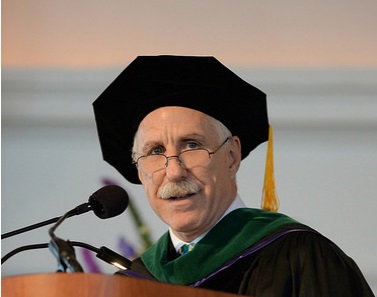
Warren S. Browner, MD, MPH

Dartmouth’s Geisel School of Medicine Commencement Address

Warren S. Browner, MD, MPH is Chief Executive Officer of California Pacific Medical Center. A board-certified internist, Dr. Browner is a Senior Scientist in the CPMC Research Institute; Clinical Professor of Medicine, Geisel School of Medicine at Dartmouth College; and Professor (adjunct) of Epidemiology & Biostatistics at University of California, San Francisco. Prior to joining CPMC in 2000, Dr. Browner was on the full-time faculty at UCSF for 15 years, serving as Chief of General Internal Medicine and Acting Chief of the Medical Service at the San Francisco VA Medical Center.  He has served as Executive Editor of the American Journal of Medicine for seven years. He has been a member of Federal panels for the National Institutes of Health, the Department of Veterans Affairs, and the Food and Drug Administration. Dr. Browner received a B.A. from Harvard College in 1975; an M.D. from UCSF in 1979; a Master’s degree in Public Health (M.P.H.) in Epidemiology from UC Berkeley in 1983; and completed a residency in internal medicine and a fellowship in clinical epidemiology at UCSF.

The Medical Commencement Archive Volume 3, 2016
Categories
General Lifestyle

Goals between 1st and 2nd Year

When we were young, summer days were our most free. Our neighborhoods suddenly became hives of activity; kids playing baseball in the streets, video game sessions lasting all day, trips to the pool, family vacations, and most importantly, no school. Those days of summer seemed too short, and during the long winter months when school seemed to stretch on forever, I often sat and daydreamed of the days when I could wear shorts and a t-shirt. For many, summer vacations can last through college, with time spent abroad or back home enjoying the comforts of their childhood. Medical school, however, changes the game.

For those who come straight to medical school from their undergraduate institutions, the last true summer might be the one between the first and second year of medical school. In fact, most schools give students several weeks off to decompress after the long struggle of first year. Therefore, it’s worth asking: what do we do with this time? With that question in mind, I went out and queried fellow students from all years, as well as several physicians in practice and in academia, in order to collect ideas. Not surprisingly, there were a huge variety of answers, but they divided into two basic camps. About half said to do something, anything, to prepare ourselves for our future careers, and the other half said to enjoy the last vestiges of our youth.

The arguments are valid on both sides of this debate. Amongst those who said to do something “productive,” about 75% said to, more specifically, gather experience in an area of interest. Whether through shadowing or more formal experiences such as research opportunities, the idea is to gain whatever knowledge and experience you can to make choosing a specialty easier. Additionally, these measured voices said, you will gain a little extra something on your CV that might impress residency programs. For instance, a friend who had an interest in mental health and addiction medicine spent the summer doing research in a major university setting. He applied months in advance and said the experience changed his life. On the other hand, the remaining 25% said to spend time studying for the Boards. “They’ll creep up on you quickly, so best to start early,” one professor told me. He suggested creating a plan of action for the summer, including high yield topics to review each week.

The “do nothing” crowd, or those on the other side of the argument, also had their say. Many advocated that this last summer is the perfect chance to do a few things that simply won’t be possible in the years ahead. “For those who enjoy traveling, take the chance to get away,” they repeated again and again.  A student who recently matched into PM&R told me that he went to Europe for 4 weeks, rode the train, met lots of great people, and “stayed as far away from studying as [he] could.” He added that this gave him the chance to recharge his batteries before tackling the challenges of second year and beyond. While traveling Europe might not be possible for all of us, finding ways to decompress should be. A family medicine physician who has spent 20 years in practice told me that he went home, saw family, and spent lots of time fishing.

In the end, there is no clear path. Just like with everything else, how to spend that last summer is a very individual choice. My own experience involved taking time off to rest and reflect, and also spending a month locked in a room with some fellow students crafting a business plan for a student-run free clinic, which, after a lot of work and fundraising, opened the next year. I also completed a 2 week internship in rural medicine. I wouldn’t change anything about the summer; both of those work experiences motivated me in different ways regarding the type of physician I want to become, while taking time to rest rejuvenated me for the trials ahead. No matter what you choose, remember to do what makes the most sense for you. If you need the rest, take the chance to get it. If you want to work on something you feel passionate about, do that. While it may seem like another multiple-choice question, in the end, there is no wrong answer.

Featured image:
travelling by Elvira S. Uzábal – elbeewa

Categories
Lecture The Medical Commencement Archive

Humanism in Medicine and Healthcare in the Community

Good afternoon, and thank you for inviting me to be your speaker today. My name is Paul Rothman, and I am the dean of the Johns Hopkins University School of Medicine and the CEO of Johns Hopkins Medicine. It’s my privilege to be here on this memorable occasion to celebrate you, the esteemed graduates of the Northwestern University Feinberg School of Medicine Class of 2016.

First, I want to say congratulations. You should be incredibly proud of yourselves. You have succeeded in one of the country’s most prestigious and rigorous programs, which is a testament to your immense talent, intelligence and drive.

Whether you are moving on to a residency, a postdoc, a job in industry or another professional stepping stone, today opens up great possibilities for you. You are forging ahead in an era of unprecedented opportunities in science and medicine.

In 2016, we are on the verge of some astounding breakthroughs, thanks to increasingly sophisticated medical imaging tools, next-generation gene sequencing, computational modeling, and other technologies that allow us to obtain and analyze complex data sets.

I started my career in 1984, when our work as medical professionals was far different than it is today. Over the past 30 years, I have had the pleasure of witnessing stupefying advances in medicine—progress that has had enormous impact on how we diagnose disease, deliver health care and conduct health-related research.

The rate of progress should be even more stunning during your careers. Soon, your whole genome is going to be accessible on your iPhone. An EKG will be self-administered at home with a hand-held device, and an iWatch will monitor seizure activity. Highly accurate autonomous robots will assist surgeons in the OR. And health behaviors will be tracked so closely that we will know in real time whether patients are adhering to their treatment regimens. There’s no doubt that technological innovation will save many, many lives.

Which raises the question, as I look out at all of you newly minted doctors: What is the role of the human doctor in this brave new world of medicine, which threatens to reduce the patient to a data set and “doctoring” to an algorithm? How can we harness the power of technology without undermining the doctor-patient relationship?

I recently read a striking study by an assistant professor of medicine here at Northwestern named Enid Montague. She used videos to analyze eye-gaze patterns in the exam room and found that doctors who use electronic health records spend roughly onethird of each visit staring at the computer. Not only is that alienating, but it can mean that we doctors aren’t picking up on important non-verbal cues from our patients.

And the more sophisticated our medical technologies get, the more potential there is for this distancing effect. For example, a hand-held ultrasound is more precise than a traditional physical exam—be it percussing a patient’s abdomen to determine the size of the liver or putting a stethoscope to someone’s chest to listen for abnormal heart rhythms.

But the human touch is an important part of building trust between doctor and patient. Can you imagine a scenario in which a doctor did a physical exam without once actually laying hands on the patient?

I like to argue that technology serves to get the unneeded variation out while the physician is there to keep the needed variation in health care.

The computer can ensure that the diagnostic process is efficient and thorough, with all potential diagnoses considered. But the physician must be there to help interpret findings or to say, maybe that patient can’t afford that drug, or that treatment regimen is too complex for that patient to manage. We as human doctors can factor in so many subtle observations and make an appropriate judgment call.

In order to do that, we need to listen. William Osler, one of Johns Hopkins’ founding fathers, is famous for saying: “Listen to your patient. He is telling you the diagnosis.” And I would take this opportunity today to echo that advice to all of you.

Here’s the thing: I believe that most of us who go into this field start out compassionate— motivated to help our fellow humans and relieve suffering. I can tell you that’s what drew me to medicine, and I’m sure the same is true for you.

It used to be we would train residents out of this inclination to be humanistic—through impossibly grueling hours and a culture of browbeating. When my wife and I trained, we worked more than 100 hours a week, and it took us years to start feeling human again after that.

Fortunately, I believe medical schools have made great strides over the past decade in nurturing empathy. We’ve changed our selection criteria to attract more caring, well-rounded people, and our residents are now limited to a somewhat more humane 80-hour workweek.

The problem is that in trying to teach our trainees to be more humanistic, we’re going against the grain of society. In 2016, efficiency is the name of the game, so doctors’ visits and hospital stays are growing shorter, making it harder to form meaningful relationships with our patients. Furthermore, so much of our communication today is now mediated through technology. Think about it: People vet potential mates through online dating sites. Friends stay in touch over Facebook. We communicate with our officemates via email.

Health care is a service industry, so look at other service industries and you’ll see a trend of dramatic depersonalization over the past couple of decades. When was the last time you spoke to a human while making a travel reservation or depositing a check? I just read that Wendy’s is adding self-service ordering kiosks to all its restaurants this year. For better or worse, DIY gene testing is already on the scene. As younger generations enter the workforce, this trend will only intensify.

But here is the really good news about your generation, and this gives me a lot of hope. Even though millennials have been raised on technology, study after study shows that your generation is more community-minded than the Gen Xers and baby boomers who preceded you.

You’re more likely than previous generations to state that you want to be leaders in your communities and make a contribution to society, and roughly 70 percent of people your age spend time volunteering in a given year. Not only do you all have the idealism of youth, but you’re also matching that idealism with action. And it’s inspiring.

At Johns Hopkins, all our trainees participate in service projects, and I suspect that’s true for most of you as well—whether it’s providing free hepatitis B screenings for community members in Chicago’s Chinatown or donating your time to CLOCC, Northwestern’s Consortium to Lower Obesity in Chicago Children. In my view, the very best physicians are those who possess a service ethos—who are not just humanists, but humanitarians.

Recently, I was helping my daughter with her medical school applications, and one of the essay prompts included this quote from the late Nobel Laureate George Wald: “The trouble with living with contradictions is that one gets used to them. The time has come when physicians must think not only of treating patients but also of trying to help heal society, if only so that their work is not incompatible with … surrounding circumstances, partly of their own making.”

Let’s unpack that quote.

In American cities, long-standing systemic inequities mean that many members of our communities lack access to adequate health care, decent schools and other advantages that many of us here today take for granted. What Wald is saying is that we can’t be content to cure sick people and lecture them on how to stay well without also addressing these underlying social conditions that contribute to poor health and the glaring health disparities we see in our cities.

We cannot satisfy ourselves with doing one and not the other—particularly in light of the social unrest that has been happening here in Chicago and in my city, Baltimore, over the last year and a half following the deaths of Laquan McDonald and Freddie Gray. These and other events have provoked Americans to confront some difficult truths. Wherever your career takes you next, I ask that you try to channel those feelings into positive action.

After all, why put such herculean efforts into healing people and finding cures if we will stand for an environment that contributes to shortening their lives?

When we do make scientific advances, we have to ensure that everyone in our society—regardless of race or income—has equal access to the latest and greatest medicine has to offer.

In January, the director of our gynecologic oncology service at Johns Hopkins published an article looking at trends in the way we treat cancer of the uterus.

It used to be when you operated on a patient with early-stage uterine cancer, you did a hysterectomy by slicing open the abdomen. The incisions were large and sometimes could lead to infection, blood clots, major blood loss, etc. These days, minimally invasive surgery (laparoscopic or robotic) has become the standard of care, curing roughly two-thirds of these patients with far fewer complications than the old method.

At Johns Hopkins, we choose this method more than 90 percent of the time, unless there’s a complicating factor. Yet when our scientists looked at the national data, they found a troubling trend: African-American and Hispanic women are less likely to get the better, minimally invasive brand of surgery, as are patients who are on Medicaid or are uninsured.

  • I wish I could say this was a shocking finding, but unfortunately, it’s all too common. Here are a few startling facts on health inequity in the U.S. today:
    African-American adults are at least 50 percent more likely to die prematurely of heart disease or stroke than their white counterparts.
  • The prevalence of adult diabetes is higher among low-income adults and those without college degrees.
  • The infant mortality rate for non-Hispanic blacks is more than double the rate for non-Hispanic whites.
  • In Chicago, predominately white communities have much lower rates of overweight/obese children than communities that are predominantly African-American and Hispanic.
  • In the area surrounding The Johns Hopkins Hospital in Baltimore, the life expectancy changes dramatically from neighborhood to neighborhood— by as much as 20 years!

In 1966, Martin Luther King Jr. said, “Of all the forms of inequality, injustice in health care is the most shocking and inhumane.” So what can we—or, more specifically, you—do about it?

Any strategy health care professionals develop to address population health must address the root causes of poor health, including poverty. Of course, the problems associated with poverty are incredibly complex, and breaking the poverty cycle requires an approach with many prongs, beginning with education.

I don’t expect you all to have the answers right out of medical school. All I ask, as you set off on your quest to eradicate disease, is that you take seriously your role as leaders in the community. The degree you are earning today confers a measure of responsibility, and I have total faith that your generation will get us closer to solutions to these pressing problems.

As busy as we are, trying to make our mark on the profession and, by extension, “human health,” we can’t lose sight of the people in the very neighborhoods our institutions exist to serve. I believe the medical community has a real opportunity to lead in helping to heal our cities, conquer inequality and create better opportunities for all. That work starts with the humanity and compassion in each of you.

Again, I want to congratulate you for this terrific accomplishment. We know you are going to achieve great things. Thank you.

Paul B. Rothman is the Frances Watt Baker, M.D., and Lenox D. Baker Jr., M.D., Dean of the Medical Faculty, vice president for medicine of The Johns Hopkins University, and CEO of Johns Hopkins Medicine. As dean/CEO, Rothman oversees both the School of Medicine and the Johns Hopkins Health System, which encompasses six hospitals, hundreds of community physicians and a self-funded health plan.

Paul B. Rothman, MD
Northwestern University Feinberg School of Medicine Commencement Address

The Medical Commencement Archive
Volume 3, 2016