Categories
General Public Health

The Doctor as the Advocate

Never doubt that a small group of thoughtful, committed citizens can change the world. Indeed, it is the only thing that ever has.
– Margaret Mead

Doctors are at the forefront of society. They see the dark pits and abysses of humanity that the rest of us try to forget – those depths of despair that many of us will never experience.

As Medicine continues to change, so too does its definition of illness and what it means to be ‘sick.’ Illness means more than just a set of symptoms or a mark upon an X-Ray; it resides within the choices we make every day, the people we welcome into our lives and the jobs we labor for decades at a time. As medicine continues to encompass more and more of our everyday lives, so it takes on greater responsibility.

Advocacy was defined by Earnest et al. in the January 2010 issue of Academic Medicine as an ‘action by the physician to promote those social, economic, educational and political changes that ameliorate the suffering and threats to human health and well-being that he or she identifies through his or her professional work and expertise’ (3).

An article written in the 2014 edition of the AMA Journal of Ethics further divided the definition into two: agency which refers to working on behalf of a specific patient, and activism which is directed towards changing social conditions that impact our health (6). Although many doctors are comfortable with the direct care of their patients, what can often be forgotten is our social responsibility. Not only do we need to treat patients as individuals, but also as a group – as a community.

The doctor’s role goes beyond the hospital walls. The patient is not just the person sitting in the clinic, but the person next door, the young lady who goes to the shops, the schoolboy who drags his bag over his sullen shoulders every morning. Illness takes place in more than the patient’s body; it takes place in society, in the neighborhood, in the schools that cannot provide support and the families that can no longer cope.; what impacts our health? Is it a parasite within our bodies, a virus that has entered so far into our habitat? Or is it unemployment, poor housing, discrimination, social isolation, loneliness, and abuse? These types of vulnerabilities lead to much higher rates of both morbidity and mortality in those affected (4).

The doctor is the voice of those who do not have one. The status of the medical doctor has been respected throughout the centuries; the curer of ills, the bringer of life. While this is gradually changing in the new era of patient-centered care, it is still a prevalent idea.

The doctor should use this privilege and rank within society to fight for those who cannot. As a group, doctors can hold a lot of power within society. Here in the UK, several Royal Colleges have voiced their opinions in the mainstream media over a number of issues already; in 2015 the Royal College of Psychiatrists spoke out about the long distances many of their patients had to travel for support (8), while in 2013 the Royal College of Physicians highlighted the need to tackle obesity more rigorously (9).

These days it is much easier to be an advocate. All it takes is a few clicks on the laptop and you can enter into the sphere of social media. A quick search on Twitter will highlight numerous debates that are occurring amongst patients and doctors, nurses and pharmacists, families and politicians. The battle is no longer held in the debating arena, but within the public sphere.

There is another side to advocacy. Once one decides to expose themselves to the public sphere, they open the door to a hailstorm of criticism and disapproval. By stepping outside of their niche practice and showing their faces to the world, they invite a whole host of attacks. To counter such negative experiences, many medical organizations have offered advice for healthcare professionals who wish to take a bigger role within society.

For example, the Canadian Medical Protective Association (2) recommends doctors:

  • Approach the issue with transparency, professionalism, and integrity.
  • Work within approved channels of communication.
  • Discuss concerns, suggestions, and recommendations calmly.
  • Provide an informed perspective, and attempt to include the perspectives of patients and other healthcare professionals.
  • Persuade rather than threaten or menace others.
  • Remain open to alternative suggestions or solutions, and try to build on areas of consensus.

Another critique against advocacy is the question of the doctor overstepping her boundary. Is advocacy within the remits of the doctors’ role? There is after all a social contract between medicine and society; it is society that holds up the profession to the highest esteem, expecting them to abolish disease and alleviate suffering. A person does not take off their professional cloak the minute they leave the hospital grounds – rather, its presence can be felt in every setting, whether it be the local shop where they grab their newspaper or the primary school where they pick up their children; it is a type of respect that is rarely be found in other professions (4). Medicine and society are intricately linked, and to claim that the doctor’s job ends once the patient leaves the room is to be blind to the role of healthcare in people’s day-to-day lives.

Yet the role of advocacy is not a role that every doctor may wish to take on. Some doctors may fall into advocacy with burning desire to change the world, while others would prefer the calming atmosphere of the hospital room, with just themselves, their patient and a piece of paper in between. I believe advocacy was described best in 2011 when Dr Huddle, Professor of Medicine at the University of Alabama Birmingham, said that it “must remain an occasional and optional avocation in academic medicine, not a universal and mandatory commitment” (3).

On another level, we must be careful not to politicize medicine too far (5) – medicine is for the public and not just a puppet dancing on the strings of politicians. Medicine must speak for those who cannot, yet still maintain its autonomy. Certainly many of the issues that impact our health are heavily politicalized areas – from housing to employment to funding cuts. Doctors must be careful when speaking for their patients. They must not allow their words to become blinded by their biases. We must remember that the doctor’s duty is first and foremost towards her patients – to the public.

There are plenty of examples of advocacy out there –doctors who blog about the daily struggles of their patients, Twitter discussions about mental health and social care, and the clinicians who write books and articles pursuing public policies with an aim of building a more just, equal and ultimately healthier society.

So, how can you get involved? Grab a book, read a newspaper; join the debates on Twitter, pen an article, start a discussion – go out there and let your voice be heard.

Below are some examples:

The Seven Social Sins:
Wealth without work.
Pleasure without conscience.
Knowledge without character.
Commerce without morality.
Science without humanity.
Worship without sacrifice.
Politics without principle.
– Gandhi, 1925 (7)

References

  1. Oxford Dictionaries. Advocacy [Online]. Available at: http://www.oxforddictionaries.com/definition/english/advocacy[Accessed: 4th January 2016]
  2. The Canadian Medical Protective Association. 2014. The physician voice: When advocacy leads to change [Online]. Available at: https://www.cmpa-acpm.ca/-/the-physician-voice-when-advocacy-leads-to-change[Accessed: 4th January 2016]
  3. Kanter, S.L. 2011. On Physician Advocacy. Academic Medicine. 86:1059-1060
  4. Dharamsi, S., Ho, A., Spadafora, S., Woollard, R. 2011. The Physician as Health Advocate: Translating the Quest for Social Responsibility Into Medical Education and Practice. Academic Medicine. 86:1108-1113
  5. Huddle, T.S. 2011. Perspective: Medical Professionalism and Medical Education Should Not Involve Commitments to Political Advocacy. Academic Medicine. 86:378-383
  6. Freeman, J. 2014. Advocacy by Physicians for Patients and for Social Change. AMA Journal of Ethics. 16:722-725
  7. Easwaran, Eknath(1989). The Compassionate Universe: The Power of the Individual to Heal the Environment. Tomales, CA: Nilgiri Press.
  8. Buchanan, M. 2015. Mental health patients sent ‘hundreds of miles’ for care [Online]. Available at: http://www.bbc.co.uk/news/uk-33535864 [Accessed: 17th January 2016]
  9. BBC News. 2013. NHS obesity action plea by Royal College of Physicians [Online]. Available at: http://www.bbc.co.uk/news/uk-wales-20878210 [Accessed: 17th January 2016]

Featured Image:
Speak up, make your voice heard by Howard Lake

Categories
Lecture The Medical Commencement Archive

The Past, Present, and Future of Medicine

It is a special time in medicine.

This is a time of the most rapid transformation in generations! You have scientific knowledge and technical abilities that far surpass those of your predecessors. You can multitask better than most. I know– I’ve seen you on the wards and in clinics—whipping out your smart phones, clicking on answers to clever questions barely out of my mouth. Us older  physicians struggle to keep up with you.

What a privilege you have for a patient to say, “That’s my doctor!” You will care for thousands of patients during your careers. But remember, they will only see a small number of doctors. You will be very special to them in ways beyond your comprehension. They need an anchor, a belief that someone is thinking about and looking after them…and you will provide this without even knowing.

You will experience a better balance between your work and your family life than existed for our generation. You will no longer be such a slave to the profession in which family and friends who nourished us were too long neglected. Our multi-professional teams help us achieve this, with each member complementing and supporting each other. Such a balance is healthy, leads to better care and prevents burnout!

It is a challenging time in medicine.

The demographics are changing in our society. There is an increased demand for your services due to population growth and aging, as well as the arrival of healthcare reform. Soon, the majority of our nation’s population will be “ethnic minorities,” looking like New Mexico. Diversity brings a rich sharing of culture, language and values. But it also poses threats that could divide us. We must find
a way to overcome divides by race and ethnicity, by gender and sexual preference, by income and geographic isolation.

Your challenge is to bridge these divides, finding connections with patients far removed from your own upbringing, economic status, religious or ethnic beliefs. While we have the means to treat virtually everyone that crosses our doors, access to our care is not guaranteed—either because of transportation challenges, linguistic barriers, financial impediments or social marginalization of certain
groups.

Our nuclear families are shrinking as young people leave for schooling or for jobs. This leaves no grandmother around to offer guidance to a young, single mom about how to treat her feverish child in the middle of the night. In such an isolaisolation-
generating environment, clinics and emergency rooms often replace family for comfort, re-assurance and social connection. Some people feel so alienated, they have given up on the healthcare system except for late night runs to the emergency room for a neglected toothache, or an infected needle track, or for a sick teen who delayed treatment while waiting for access to the lone family car.

We will be challenged to gain skills and an understanding of domains far from our traditional areas of strength—population health, management of health teams, the business of medicine. Thus, our generation of physicians leaves you both with a legacy and a mess!

Medicine has a powerful history.

Look how rapidly our field has progressed in just a few generations and what a terrific time it is to enter the physician workforce.

First, let me recall some recent history: when your entered medical school four years ago. I’m sure the week you began medical school your grandma asked you, “What’s this bump on my arm?” You protested, “Grandma, I’m only a beginning medical student!” But she said, “Yes, I know, but just tell me what you think this is.” That’s when you found out that what you think of yourself in this
profession is not important—it’s what your family, your patients and your society thinks of you that is so very important.

There is an expectation of your competence and ability to heal which feels uncomfortable—an expectation you can’t fulfill. But, as time marches on, you’ll grow into these new clothes.

Now, let’s go back further in history and reflect on what doctors in New Mexico faced more than a century ago.

We begin with impotence in the face of diphtheria. In 1882, there were no immunizations against diphtheria, so the physician’s presence at the bedside WAS the medicine in his “doctor’s bag.”

Still, the cases were difficult:

Case 1- “I was called to bedside on Saturday. Found patient with difficult respiration and suppression of urine. On introduction of catheter, no urine was found in bladder. Performed tracheotomy; breathing very difficult; death in about 24 hours.”

Case 2 – “Patient a five year old…performed tracheostomy…lamp went out…operated with difficulty taking about ½ hour…spasms…died in about 12 hours.”

In Las Vegas, NM in 1914, doctors had many medicinal purposes for whiskey—to steady their own nerves, to use as anti-septic in the belief that they could kill off germs that cause diphtheria, even in kids, and as a pain killer. I relate to this last use, for I once had shingles, which felt like a hot branding iron on my side. I went to the local hospital and was prescribed narcotics, which didn’t
touch the pain. I was desperate. A colleague suggested I try alcohol. “I don’t drink,” I objected. But I bought a bottle of whiskey. It tasted terrible…and my pain disappeared. Swigging whiskey, I remained drunk for a week and felt no pain!

Prejudice and stigmatization were as rampant among our forebears as they are today with AIDS, mental illness, or in the attitudes of some toward immigrants. In 1904 a distinguished physician from Las Cruces warned of those with tuberculosis coming to NM for “the cure.” He said, “The army of tubercular invalids should be brought under control, promiscuous expectoration should be stopped
and every possible means taken to prevent these unfortunates from becoming a danger to the population… I most assuredly do believe that in return for the health-giving properties of our glorious climate, they should be willing to submit to some legal regulation!

This sounds remarkably like our national political dialogue today.

You have skills and tools for diagnosis and treatment that many of us on stage could only have dreamed of when we were students. Not long ago, when I was a student, we treated congestive heart failure by bleeding patients and tying tourniquets to their limbs to prevent too much venous blood returning to overwhelm their failing hearts. Today, you’re equipped with powerful diuretics, medicines
to lessen heart stress, and coronary catheters to unblock clogged arteries.

Not long ago we warehoused the mentally ill, the developmentally disabled and the tuberculous in sanatoriums. Today, with stronger therapeutic means at your disposal, and better understanding of the pathophysiology of disease, most of these individuals live at home or in the community.

And not long ago, at the turn of the last century, most health providers were physicians. Today, physicians make up less than 10% of the health workforce—for we train with and rely on multi-professional teams to better care for our patients. While we train mostly in isolation from other health professions, we will spend our professional careers in interdependent collaboration with a growing number of health professionals skilled in vital areas which complement our own skills. We depend upon pharmacists, nurses, physical therapists, occupational therapists and even community health workers.

And look what we face today. No matter what specialty you enter, the care you give will be affected by the social determinants of disease faced by your patients: educational attainment, income and poverty, access to nutritious food, yearning for social inclusion. These socioeconomic forces contribute more to health than all the medical care we provide. This is a humbling thought. But we’re
rising to the challenge. Community health workers, our frontline in addressing social determinants, are now hired for each of our primary care clinics. Our own Gwen Blueeyes sent me this note summarizing her work with one of our patients:

“Patient came to see me in clinic so I could help her obtain food. She appeared overwhelmed with her current situation. She said, “I’m losing my car at the end of this month because I’m behind on my car payments. I’m afraid I’ll be evicted because I’m unable to pay my rent. I receive some social security benefits, but it’s not enough to cover my living expenses. My  local churches couldn’t find me any assistance.

I did the following: Helped her complete her food voucher benefits application, connected her with “adopted families” to
help pay last month’s rent, helped her complete paperwork for the Income Support Division to help cover cost of her Medicare premiums, and scheduled an appointment for her with the hospital Patient Financial Services Office,
which I’ll also attend to give her moral support.”

Now THAT’s an example of a powerful
addition to our heath team!

You should all be engaged in health policy. I want you to promise me that whatever field you enter, you will ALWAYS ask of the patient coming to clinic or admitted to the hospital bed, “How could this visit or admission have been prevented?” Our Chief of Neurosurgery asked, “Why do so many patients from rural hospitals with strokes and head injuries have to be flown to our Hospital at enormous
expense to patients and to those rural hospitals?” He set up a telemedicine program to review head CT scans sent from rural sites so he could advise local physicians on which patients to send, and which could safely stay put in their home community.

A pediatric endocrinologist wondered why her diabetic patients in New Mexico had to travel so far to Albuquerque for checkups. Half her diabetic children were on insulin pumps, allowing them to use the internet to download their glucose readings and send them to Albuquerque for review. This doctor can now advise patients on fine-tuning their management in their homes, sharply reducing
their trips to Albuquerque.

One of your classmates noticed that despite the recommendation that all patients with congestive heart failure contact their doctor at the first sign they are retaining too much fluid—3 lb in a day or 5 lb in a week- when asked, 4 of 5 patients admitted with congestive failure on our service had no bathroom scale. So she is working with cardiology and our hospital administration to propose buying $20 digital scales for all discharged patients with congestive failure who don’t have scales, which is aimed at reducing re-admissions for this condition.

And finally, a medical student and resident on our inpatient service explored how they could have prevented the admission of two patients admitted to our service in diabetic ketoacidosis. Both were poor, on UNM Care, and since insulin was so expensive, they had to use our hospital pharmacy to get affordable insulin. The problem, they discovered, was that our UNM Pharmacy was only open
8-5 when the patients were at work. They worked at jobs without benefits and feared if they took off from work, they could lose their jobs. The student and resident presented their findings to the UNM Pharmacy which agreed to stay open after-hours. Different generations teach each other.

Like Jedis, we taught you the ancient ways of diagnosis–using the “scratch test” to assess liver size, tapping muscles to check for “myo-edema” to diagnose protein malnutrition, and observing “sighing respiration,” a sign of anxiety.

But you upstarts taught our generation how to use dynamic documentation, how to quickly pull up x-rays on the computer, and how to access the latest evidence on your iPhones in seconds.

Older and younger generations in medicine offer continuity and mutual learning. I experienced this in my own home when I bought my first iPhone. I was typing away with my thumbs when my son looked over and asked what I was doing. “I’m texting,” I said. “No you’re not,” he said. “What am I doing?” I asked. “You’re e-mailing!” he said. “What’s the difference?” I asked. He had to show me that
little texting icon. Don’t ask me about Twitter!

Finally…why is your class so great?

I interviewed faculty and staff who worked with you over the past 4 years. And their general
consensus was: “You’re just so damned nice!” Your class character has made a great impression on all of us.

You have to be the kindest, most mutually supportive, most community-minded class in a generation. The welfare of your classmates and their academic and professional success, not just your own achievement, meant something to you. In the community, you helped the homeless, the immigrants, the disabled, the elderly and youth at risk. You’ve increased access to a life-saving drug- Narcan- for opiate overdoses; you’ve testified at the state legislature for health improvement bills; you’ve helped communities fight youth obesity; you’ve brought a range of services to inner city school kids, from dental health to sex ed; you’ve organized one of the largest, free flu shot clinics imaginable (>3,000 received shots in our parking lot).

You’ve shown the power of medical students as leaders, reviving and sharply increasing participation in the Student Council as a force
for positive change in our academic health center. You’ve organized mentors within your class to help all pass the Boards! And during Match Day, instead of rushing the table to grab and open your residency match envelopes like most classes, you politely approached the table calmly, helping each other find your respective named envelopes.

These are the skills that predict success in our highly social, interdependent field of Medicine. I was touched by an e-mail I received from one of your schoolmates relating an experience she had during her first year PIE rotation in rural New Mexico. She was attending a school-based clinic near her clinical site. Through fresh eyes, she summarized her following interaction with a teen patient:

“I can’t get out of my mind a 16 year old I saw today. She wouldn’t look me in the eye, and sat in the exam room sort of slumped over. I asked “What’s going on?” “My stomach hurts and I have a headache,” she said. Then all this craziness
started pouring out. “I haven’t slept in days,” she said. “My aunt keeps getting incredibly drunk. Last night my uncle was beating her and my aunt was so drunk, she wandered away.” “I can’t concentrate… My grandfather is dying. I
just lost 3 family members to alcohol. My mom says there’s not enough room in her house for me. I was just
separated from my sister…the one person who understands me. I can’t call her—her phone’s been disconnected.
I only eat what they have here in school—I get one or two meals a day…there’s no food at home. Even when I do eat, I sometimes throw up…I can’t help it…I’m so tired.”
With my mouth gaping, I collected myself. I got her some extra food from the school cafeteria, gave her a little something to settle her stomach, gave her a hug, and referred her to New Horizons. Deep down, I wanted to adopt her. She said she trusted me. God, she trusted me!”

THESE are the qualities that our field is looking for. Class of 2016, you’ve got it!


Dr. Kaufman received his medical degree from the State University of New York, Brooklyn in 1969 and
is Board Certified in Internal Medicine and Family Practice. He served in the U.S. Indian Health Service,
caring for Sioux Indians in South Dakota and Pueblo and Navajo Indians in New Mexico, before joining the
Department of Family and Community Medicine at the University of New Mexico in 1974, where he has
remained throughout his career, providing leadership in teaching, research and clinical service. He was promoted
to full Professor in 1984 and Department Chair in 1993. In 2007, he was appointed as the first Vice
Chancellor for Community Health, and was promoted to Distinguished Professor in 2011.

Arthur Kaufman, MD
University of New Mexico
School of Medicine Commencement

The Medical Commencement Archive
Volume 3, 2016

Categories
Clinical Opinion

Mental Disorders: Are We Over Medicating?

In 1948, the World Health Organization (WHO) defined health as “a state of complete physical, mental and social well-being, and not merely the absence of disease or infirmity.” However, mental illnesses are not seen in the same light as physical illnesses. People who get labeled with psychiatric diagnoses often carry a heavy burden of social stigma regarding those diagnoses, and are generally uncomfortable disclosing and/or discussing them openly.

In ordinary conversation, it is not considered strange to mention that you had an appendectomy or discuss how you’ve been dealing with your diabetes for years. However, saying that you’ve been manic-depressive for years or that you’ve been desperately trying to overcome panic attacks is something that typically generates a negative response, and raises red flags for some people.

Why is mental health perceived so differently than somatic and physical health?

My inspiration for writing this piece was a debate about mental disorders held at the Emmanuel Centre in London, entitled: We’ve Overdosed. Psychiatrists and the Pharmaceutical Industry are to Blame for the Current Epidemic of Mental Disorders. Psychoanalyst Darian Leader, and accomplished author on the issue Will Self, argued for the “overdosed” side, while Dr. Declan Doogan and Professor Sir Simon Wessely, president of the Royal College of Psychiatrists, argued against it.

Is it true that mental disorders are made up by big pharma? Or is it just that we have a difficult time accepting that our psyche can, indeed, be a subject (or object, depending how you see it) of pathologic deviance and aberration? And that such aberration could and should be subjected to medical treatment?

Some critics view mental disorders as illnesses that have no definitive pathomorphological substrates. Are physicians overprescribing these agents to satisfy big pharma interests? Do they purposefully try to make the psychiatric bible (a.k.a. Diagnostic and Statistical Manual of Mental Disorders – DSM) thicker and thicker in each subsequent edition by bloating it with irrelevant and artificially fabricated diagnoses?

No one is claiming that every form of deviation from the “gold standard” of behavior (if such thing exists at all) is and should be proclaimed as a psychiatric disorder. No one is saying that every psychiatric disorder needs to be treated pharmacologically. No one is denying that many psychotropic drug treatments, unfortunately, fail among some patients. No one is saying that some classes of psychotropic drugs don’t induce debilitating side effects.

However, as future physicians we always have to remember that we will have a person with a problem sitting in front of us. This person will be seeking our help. We only have what is available to help them. We can only fight with the weapons that we have. Yes, sometimes treatment in psychiatry feels like we are trying to kill a mosquito with a rocket launcher. But it is the only thing we have got and for some it can be a salvation, regardless of the collateral damage.

My psychiatry professor once said, “if there is an equivalent of hell on Earth, it would be in a soul of a depressed person.”  I could not agree more.

Severe mental disease is not a joke. It is not something that can be solved with a thoughtful late afternoon conversation, by reading a line or two from Coehlo, or by reciting a poem by Neruda. Sure, activities like those are great adjuncts and can help ameliorate the situation to a degree, but people who are in trouble often need and demand much more from us.

Let’s not forget that when we’re talking about mental disease we are talking about the state of a diseased brain (physical) and mind (cognitive/psychiatric), which is most likely due to a neurochemical imbalance within the central nervous system circuits. This imbalance needs to be medically treated, especially in cases where it severely interferes with daily living. For some people, psychotropic medication is their only hope and the only chance they are going to get. For some people these medications perform miracles. We do not have a right to deny them such a possibility.

References

  1. Angermeyer MC, Matschinger H. The stigma of mental illness: effects of labelling on public attitudes towards people with mental disorder. Acta Psychiatrica Scandinavica. 2003;108(4):304-9. doi: 10.1034/j.1600-0447.2003.00150.x.
  2. Schomerus G, Schwahn C, Holzinger A, Corrigan PW, Grabe HJ, Carta MG, et al. Evolution of public attitudes about mental illness: a systematic review and meta-analysis. Acta Psychiatrica Scandinavica. 2012;125(6):440-52. doi: 10.1111/j.1600-0447.2012.01826.x.
  3. Fournier JC, DeRubeis RJ, Hollon SD, Dimidjian S, Amsterdam JD, Shelton RC, et al. Antidepressant drug effects and depression severity: a patient-level meta-analysis. Jama. 2010;303(1):47-53. Epub 2010/01/07. doi: 10.1001/jama.2009.1943.
  4. Arroll B, Elley CR, Fishman T, Goodyear-Smith FA, Kenealy T, Blashki G, et al. Antidepressants versus placebo for depression in primary care. Cochrane Database of Systematic Reviews. 2009(3). doi: 10.1002/14651858.CD007954.
  5. Leucht C, Huhn M, Leucht S. Amitriptyline versus placebo for major depressive disorder. The Cochrane database of systematic reviews. 2012;12:Cd009138. Epub 2012/12/14. doi: 10.1002/14651858.CD009138.pub2.

Featured image:
Reeve041788 by Otis Historical Archives National Museum of Health and Medicine

Categories
Lecture The Medical Commencement Archive

The Power of Not Knowing

Dr. Akram Boutros joined The MetroHealth System as President and Chief Executive Officer in June 2013. He serves as the leader of The MetroHealth System and is its primary public representative, reporting to the MetroHealth Board of Trustees. He works in partnership with the Board to ensure that the organization fulfills its mission and creates strategies that ensure its future success.

Dr. Boutros has more than 20 years of leadership experience in large community hospitals, specialty hospitals and academic medical centers. Most recently, he was President of BusinessFirst Healthcare Solutions, a health care advisory firm focused on clinical  transformation, operational turnarounds and emerging health delivery and reimbursement models. Dr. Boutros previously served as Executive Vice President and Chief Administrative Officer of St. Francis Hospital – The Heart Center in Roslyn, New York, and as  executive Vice President, Chief Medical Officer and Chief Operating Officer of South Nassau Hospital in Oceanside, New York. An internist, Dr. Boutros received his Doctor of Medicine from the State University of New York Health Sciences Center at Brooklyn. He is a graduate of Harvard Business School’s Advanced Management Program and is a recognized thought leader in management systems.

Dr. Boutros also serves on the boards of the Greater Cleveland Partnership, United Way of Greater Cleveland, the Cuyahoga Community College Foundation and the Cleveland Ballet. Most recently, he served as Chair of the American Heart Association 2015 Cleveland Heart Ball, the most successful in the city’s history. He has been named to Power 150 by Crain’s Cleveland Business, Power 100 by Inside Business Magazine and EY 2015 Entrepreneur of the Year for Community Impact in Northeast Ohio.

Twenty-eight years ago, I sat where you sat, thought what you thought, and asked myself, is medical school really over? 

Will I be a good doctor?
What will the future of health care look like?
Where do I fit into that future?
Will I survive those coming changes?

My answer to each of those questions was the same: I don’t know. No one knows. But I do know a few things after nearly 30 years in this crazy profession that you are a “flip of a tassel” away from entering. I learned the first one when I was a little older than most of you.

I was in my second year of residency, near the end of one of my every-third-night ICU rotations. Exhausted, I had fallen into a deep sleep when a nurse woke me to tell me a patient who was septic – filled with infection – had become acidotic – possessing a level of acid in bodily fluids so high, it can kill you. Still foggy, I sat up in bed and said, “Give her an amp of bicarb.” It was a reflexive response. I knew bicarbonate, a base, would correct the acidosis. And as soon as I said it, I laid my head down and fell back asleep.

Five minutes later I woke again, covered in cold sweat. I’m not just using that phrase here. I was in a cold sweat. Somewhere in my subconscious, I remembered that this woman, this septic patient, also had end-stage renal disease. Her kidneys had failed. And she was retaining so much fluid it was straining her heart. As many of you know, bicarb is short for sodium bicarbonate and sodium is salt and that salt would make her retain even more fluid. I had just ordered a remedy that could kill her.

Fully awake, heart racing, I ran to her room. I was too late. The nurse had followed my orders. What I experienced next was panic. My stomach churned. My heart raced even harder. Will she die? God, I hope not. How am I going to fix this? Who should I tell? What should I do? Is this the end of my career? What the hell is wrong with me?

No one likes to risk their reputation, to claim they made a mistake, especially a potentially deadly one. But at 2 a.m., I called my ICU attending. I called the patient’s attending. I called the nursing supervisor. I called the renal fellow. And I told them all the same thing: “I screwed up.”

Nobody yelled. And nobody fired me. Instead, together, we agreed to assemble a team to perform ultrafiltration to draw off the fluid – before it did its damage. It worked. The patient made it. She survived. Not because of me. Because of the team that gathered around me. They all wanted her to live. And they all wanted me to succeed.

Everybody wants you to succeed, too. That’s the first thing I want to leave you with today, one of the things I hope you’ll never forget: We are ALL rooting for you. Your teachers are rooting for you. Your bosses are rooting for you. The institution you work for is rooting for you. So are your patients, your family, your friends, and your spouse. ALL of us. We love you. We need you. We want you to be happy, confident, good at what you do, and in love with it. We want that for all kinds of reasons.

One of those is that someday we may need you to take our pain away, to help us walk again, to give us back enough energy to play with our kids or grandkids, to save our lives. Close your eyes now, for just a minute, and picture in your mind, the world of people who are behind you. So many of them are here today. Imagine them, in the stands, on their feet, cheering you on. And whenever you find yourself in a tough situation, come back to that image. Imagine everyone who cares about you cheering you on. Because we are.

I have another message today. This one comes from a different moment early in my career, another one I’ll never forget. It was July 1, 1988: the first day of my internship, and my first day as a doctor. I was on call and because my last name begins with B, I got the first admission to internal medicine: a transfer from another hospital. When I walked into the room in the ED, a middle-aged woman was sitting up in bed, dressed in a hospital gown, looking very anxious. I began with the textbook question: “What brought you to the hospital?”

“They think I have Churg-Strauss vasculitis,” she said.

I remembered that I’d studied the disease awhile back. I remembered that it was serious. But I couldn’t remember what it was or what organ system it affected. In fact, I couldn’t remember anything else about it. I felt unprepared, like I had nothing to offer, that I was useless.

But I kept going. I thought, alright Akram, just keep asking questions – as many questions as possible – and maybe you’ll get a clue. If that doesn’t work, try the ‘fake it ‘til you make it’ method. Maybe that works for doctors, too. I took a detailed history, asking questions about diseases in her family and what medications she was on. As I was wrapping up, she looked at me and said “So what do you think, Doc?”

I stopped and thought for a few seconds. I thought about saying “Oh, we’ll have to see,” or “We need to run some tests” or something else that would make me sound like I really knew what was going on. But when I looked at her again, I saw how concerned she was. And different words popped out of my mouth.

“I don’t know.”

I was embarrassed to admit it. But, to my surprise, she wasn’t angry or afraid. She chose understanding instead. Immediately, I promised her that I would learn as much as I could about Churg-Strauss before the next day. I told her that every day she was there, in the hospital, I would do my very best to gain the knowledge I needed to take good care of her.

She died. But it was 13 years later. And every one of those 13 years, she was my patient. During those years, she told me, more than once, that the reason she trusted me with her life was because I had been honest with her. That honesty humanized me. Those three little words – “I don’t know” – made her believe in me.

I kept my promise to her. I sought out those who knew more about her deadly vasculitis than I did. And I asked them to teach me what they knew, to be my partners in her care. Together, we gave her 13 years she might never have had.

“I don’t know.” Don’t ever be afraid of those words. They are the start of something beautiful. And they’re a reminder, every day, that we are doctors, not Supermen or Superwomen.

In America, we celebrate the Lone Ranger. And what we really need to celebrate is the Fantastic Four, no The Justice League. Sometimes – no, often – you need the Elongated Man, the Red Tornado and Wonder Woman to get the job done. Having Martian
Manhunter with his genius intellect and regenerative healing helps, too.

Remember: You don’t have to be able to do it all or know everything. Your teachers don’t expect you to. Your colleagues don’t expect you to. And your patients don’t expect you to. The only person who insists that you have all the answers is you.

Say “I don’t know.” It’s one of the smartest, bravest things you can say. It will take the pressure off. People will trust you. Nobody believes a know-it-all. Amazing things will happen when you say “I don’t know.”

I think the late poet Wislawa Szymborska said it best. In her 1997 speech accepting the Nobel Prize for literature, she talked about why she loved that three-word phrase:

“It’s small,” she said, “but it flies on mighty wings. It expands our lives to include the spaces within us as well as those outer expanses in which our tiny Earth hangs suspended. If Isaac Newton had never said to himself “I don’t know,” the apples in his little orchard might have dropped to the ground like hailstones and at best he would have stooped to pick them up and gobble them with gusto. Had my compatriot Marie Sklodowska-Curie never said to herself “I don’t know,” she probably would have wound up teaching chemistry at some private high school for young ladies from good families, and would have ended her days performing this otherwise perfectly  respectable job. But she kept on saying “I don’t know,” and these words led her, not just once but twice, to Stockholm, where restless,
questing spirits are occasionally rewarded with the Nobel Prize.”

Be restless, questing spirits. Explore, always. Exploring leads to discovery, and discovery to whole new worlds. And those worlds to the theory of radioactivity, the laws of motion and great things we never imagined were possible, things that make the world a better place.

That is why you – with this beautiful knowledge you’ve spent years acquiring – are here. You are here to make your patients better, your communities better, and the world better. And you do that by being restless, questing spirits. You do that by saying “I don’t
know.” Those three words are the start of something beautiful. THAT is one thing I know for sure.


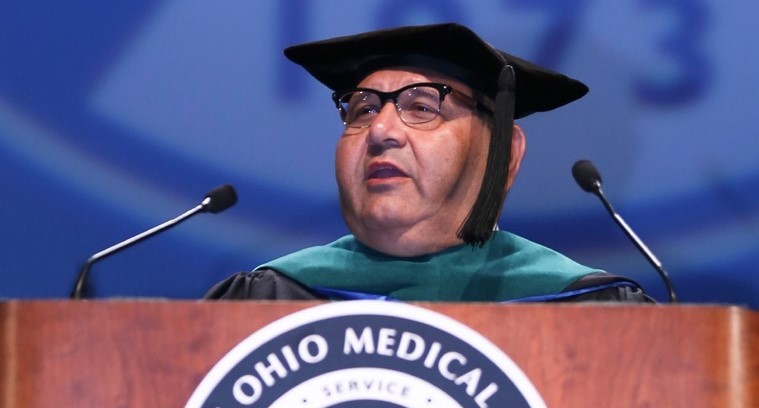
Akram Boutros, MD
Northeast Ohio Medical University
Commencement Address

The Medical Commencement Archive Volume 3, 2016


Categories
Clinical Opinion Public Health

The Opiate Epidemic: A tragedy for patients is a warning to physicians

As student doctors, we are entering the medical field in the middle of a raging wildfire: an “opiate abuse epidemic.”[1] The media would have us believe that addicted patients are perpetuating the problem of opiate misuse and overuse, but opiate misuse and overuse might only be a symptom of a larger problem: a medical culture in which physicians fail to practice good prescribing habits.

Overprescription and subsequent overuse of opiates is undoubtedly further complicated by the ambiguous disease process of chronic pain, a topic which deserves its own time and attention. Questioning provider prescribing practices, however, may be the only path forward in making sure that the tragedy of this crisis does not escalate further. In my mind, there are several features that characterize ideal, quality prescribing habits. First, quality prescribing should place an emphasis on patient education about the drug being proposed. A patient should also be screened for the risk of developing any side effects. Included in this should be a review of any other medication that the patient is currently taking, and potential drug-drug interactions. If necessary, a pharmacist should be involved in this evaluation. Finally, a plan between the physician and the patient to manage care should be established. For medications known to be highly addictive, this might involve a phone call a week later, and a follow up in-office appointment to see how the patient is reacting to the prescribed drug. If at any point these benchmarks for safely prescribing a medication cannot be met, then the treatment choice should be reevaluated.

It was curious timing that in the middle of this epidemic, on May 5, Hawaii House Bill 1072 quietly died in the Hawaii state senate.[2] Bill 1072 “Relating to Prescriptive Authority for Certain Psychologists,” was meant to allow psychologists to have medication prescribing privileges in order to compensate for the Hawaiian physician shortage.[3] At first, I was relieved to read that the bill had not passed the Senate. As a future physician, it’s unsettling to imagine another profession encroaching on the special modalities that we have at our disposal to treat patients, such as our prescribing privileges. But then I had a second thought. If the average physician fails to exercise high-quality prescribing practices, then perhaps clinical psychologists, who by definition study human behavior, might actually make better opiate prescribers than the average physician. In general, psychologists spend time listening and learning about their patients’ history and behavior patterns, offer counseling education, and meet with their patients on a regular basis. This model of health care encompasses many of the aspects needed for ideal prescribing habits, as previously described.

You don’t need a medical degree to understand that opiates are powerful drugs that have many side effects and can lead to addiction.  What we don’t yet seem to understand, as a profession, is how to effectively communicate these risks, or evaluate the best patient candidates for the use of opiates. A 1992 study by Wilson et al. found that when physicians increased the time of their patient interactions by just 1.1 minutes, there was a statistically significant increase in the amount of health education that a doctor could incorporate into a standard visit.[4] While it’s difficult to get specific data about the average length of a typical doctor’s visit[5], a 2013 article from the New York Times suggests that the average new physician spends only eight minutes with each patient.[6] If you have ever participated in a standardized patient encounter as part of your medical school curriculum, you have undoubtedly experienced the struggle to perform a history, physical exam, and basic patient counseling in 14 minutes. When you take into account the level of patient screening and education that the prescription of opiates, or any narcotic, demands, it seems implausible that a doctor can satisfy the requirements necessary to safely discharge a patient with an opiate prescription in such a short span of time.

In response to the opiate crisis, the ultimate long-term goal for the medical community should be to better understand chronic pain, and devise alternative treatment modalities for this diagnosis. In the meantime, however, the medical community should view this unfortunate situation as a call to reevaluate the quality of our prescribing practices. Current and future doctors need to commit ourselves to being worthy of the privilege of the prescription pad, so that it remains a treatment tool and not a source of patient harm.

References:

  1. http://www.cnn.com/2016/05/11/health/sanjay-gupta-prescription-addiction-doctors-must-lead/index.html
  2. www.civilbeat.com/2016/05/2016-session-ac-for-schools-help-for-housing-and-homeless/#.VyzIubQqa3o.mailto
  3. http://capitol.hawaii.gov/measure_indiv.aspx?billtype=HB&billnumber=1072&year=2016
  4. http://www.ncbi.nlm.nih.gov/pmc/articles/PMC1881485/
  5. http://www.ajmc.com/journals/issue/2014/2014-vol20-n10/the-duration-of-office-visits-in-the-united-states-1993-to-2010
  6. http://well.blogs.nytimes.com/2013/05/30/for-new-doctors-8-minutes-per-patient/

Featured image:
Medication by Gatis Gribusts

Categories
General Lifestyle

Goals for the Summer

The beginning of December is when it begins. Around winter finals, people already start to ask – What will you do over the summer?

“Should I apply to a summer fellowship?”

It’s reasonable that we want to make the most of the summer. Considering the prevalence of ordered, dutiful personalities in medical school[1], it’s no surprise that this precious time – the last summer vacation of our lives (at least, in the US school system) – is wrought with indecision.

“Are you doing research over the summer?”

We go to second-years and faculty to ask for advice. We post on Facebook or other social media outlets. We ask career counselors. They all say to take things easy. Second year is hard, so do something that is important to you. Go travel. Spend time with family. They say things like, you only have to do research if you want to go into a competitive specialty. We search Google and find resources about summer fellowships and research opportunities.[1]

“What should I do over the summer?”

I am reminded of the memoir When Breath Becomes Air, written by the neurosurgeon-in-training Paul Kalanithi. In the book, Kalanithi writes about a similar situation during his undergraduate sophomore summer. He had to choose what to do with his summer, because he had been accepted both “as an intern at the highly scientific Yerkes Primate Research Center, in Atlanta, and as a prep chef at Sierra Camp, a family vacation spot for Stanford alumni on the pristine shores of Fallen Leaf Lake [… which] promised, simply, the best summer of your life. […] In other words, I could either study meaning or I could experience it.”[1] Ultimately, he chose the job as the prep chef. And despite the outrage of his biology mentor over the lost research opportunity, Kalanithi still became a neurosurgeon.  He said his experience at the camp was meaningful, invigorating, and had lasting effects on his perspective when he returned to school. It’s a little different in medical school, but the principle is the same.

“When you look back on the summer, how will you feel?”

I struggled to decide what to do with my summer. I felt like there were a lot of options, but was unsure of what to pursue – I could conduct research on campus, be a medical volunteer at free clinics, work at a global health mission, spend time with family, travel with friends … there were too many options. I felt like all of the options were possible as long as I submitted an application on time. The most difficult part was that at my school, summer lasts only one and a half months.  Ultimately, the time constraints limited me to only one or two activities, and I wanted to choose an activity that would be “the best summer of my life.”

I had started the application for a summer research fellowship, submitted it, and was waiting to hear back. Meanwhile, I heard friends talking about how they were planning to go on trips in-state and

abroad, get married, or just spend time at home. Other friends were awarded fellowships at other academic institutions. I wondered how valuable it would be for me to spend another summer putting in forty or more hours of research a week when I had spent a number of undergraduate summers doing that before. In fact, I realized, my last real break was the summer between high school and undergrad.

In my final year of undergraduate studies, a retiring professor told the class that he was most excited about the opportunity for extended break from academia. He expressed regret that he had not taken more breaks throughout his career. My friend and I had discussed this together; we wondered whether a break from school or work could really be as meaningful as he said. I’m beginning to realize what he meant now, as my classmates and I fight through burnout during our first year in medical school. The importance of self-care cannot be overlooked.

I weighed the pros and cons of each option. When it came down to it, my ideal break consisted of: (1) reconnecting with family and friends, (2) spending time with literature – both reading and writing, and (3) exploring future career options. While important, career-building was not the most important summer activity because I still have the rest of my training and the rest of my life to work on it. For me, time with familiar people and literature are sources of enduring happiness. At the end of the day, I take comfort in cultivating these life experiences. I worked hard to create an opportunity that would incorporate all three of these items. I’m planning to spend the summer at home, relaxing and working on a small project I managed to set up with a mentor nearby.

For those coming up with their own summer goals, I suggest considering the following points:

  1. What are the pros and cons of the options you have considered so far?
  2. How much time can you allot to each of your options?
  3. Is there something you would regret missing out on?
  4. What will rejuvenate you for the upcoming year?
  5. If you could do anything, how would you spend an ideal summer?

References:

  1. There was an actual study published on this. Lievens, et. al. (2002). Medical Education, 36, 1050–1056.
  2. Interested readers may want to peruse the following pages:  “Summer Opportunities for 1st-Year Students” from Indiana University and “Summer Opportunities for Medical Students” from the Medical University of South Carolina.
  3. Kalanithi, Paul. (2016). When Breath Becomes Air. Random House, New York, NY. 31-32.

Featured image:
San Francisco Peaks from Kendrick Mountain Fire Lookout Tower by Al_HikesAZ

Categories
Clinical Reflection

The Importance of Geriatric Medicine

When the infamous question “what kind of doctor do you want to be?” has been thrown my way, I have typically responded by throwing out three fields of medicine that I currently find interesting: pediatrics, endocrinology, and geriatrics. However, while the usual response includes much satisfaction about 2 of my potential career choices—with lots of oohs and ahhs about the joys of treating children, and the approving nod for endocrinology because, hey, diabetes—the standard, usually skeptical, follow up question I receive is: why would you want to take care of old people if they are just going to die soon anyway? Isn’t that…depressing?

Despite these ageist misconceptions, the importance of the growing need for trained geriatricians in the U.S. cannot be denied. According to the Association of American Medical Colleges, the latest studies are suggesting that by 2025 the number of American baby boomers over the age of 65 will double, and become the fastest-growing age group in the country. This demographic will soon account for 20% of the nation’s population! We can see the practical results of this trend today, as Americans are clearly living longer, requiring assistance in managing chronic health conditions like hypertension, heart disease, diabetes, dementia, etc.

The most alarming fact? The American Geriatrics Society has estimated that 25,000 certified geriatricians are needed in order to provide quality care to this growing population, but currently there are fewer than 7,500 geriatricians in the U.S. In fact, only 44% of the nation’s 353 geriatric fellowship positions are even filled. Geriatrics is considered to be one of the most underrepresented specialties, even though geriatricians have been found to have high career satisfaction.

So, why the disinterest from budding physicians? Financially, geriatrics is often not considered attractive, particularly with nascent residents facing a looming amount of debt right after medical school. Most elderly patients have either Medicare or Medicaid, which have traditionally lower rates of reimbursement for physicians than that of private health insurance. Indeed, geriatricians, despite the extra years of training, have traditionally received less compensation than other subspecialists.

What can be done to help entice young physicians to this challenging field of medicine? While a restructuring of the current reimbursement difficulties would be an ideal fix to this situation, and would help entice young physicians to geriatrics, perhaps more immediately realizable goals should be considered in the meantime. For example, emphasizing the importance of geriatric medicine within medical school curricula is one alternative and realistic way in which to effect change. Students could learn of the intricacies and complexities involved in providing care to this population. This would be particularly relevant for students, as they are the generation of doctors which will be faced with treating a larger population of older individuals, given the statistics mentioned above.

Here is an even simpler idea: help people realize their passion for the field. Dr. Mitchell Heflin, MD, an associate professor of medicine at Duke University School of Medicine, said it best, “People in geriatrics are called to it.” A commonly cited influence for this career choice is meaningful interactions, particularly in childhood, with older populations. I personally can see why I am drawn to this field of medicine, as much of my happiness as a child (and up to the present day), has revolved around my experiences with the elderly. I remember every Sunday I would cross the street and have a spaghetti dinner with our elderly neighbor, affectionately known as Auntie Eva. She was a chain smoking, fiercely opinionated and loving German lady from Buffalo, who could make a killer homemade marinara sauce and meatballs. Even more influential, however, is the relationship I have with my now 83 year old maternal grandmother who has lived with my family since my birth. She not only always babysat me, but also taught me how to fish, ride a bike, tie my shoes, and crochet. Watching her gracefully age with a high quality of life through her 60s and 70s, and then seeing her current struggle with the beginning stages of dementia, has really made me reflect upon the importance of geriatric care in our society and my potential role in it.

So, while I’m not yet sure if geriatrics is in the cards for me, it is obviously a complex field of medicine, critical for the health of the older population and for the health and dignity of our society at large.


References:

https://www.aamc.org/newsroom/reporter/april2015/429722/fewer-geriatricians.html

http://health.usnews.com/health-news/patient-advice/articles/2015/04/21/doctor-shortage-who-will-take-care-of-the-elderly

Featured image supplied by the author

Categories
Clinical Emotion Reflection The Medical Commencement Archive

Compassion, The Heart of Medicine

Dr. Rob Horowitz is an Associate Professor of Clinical Medicine and Pediatrics, and is board-certified in Internal Medicine, Pediatrics and Hospice & Palliative Care Medicine. After 14 years of working as a rural Emergency Physician, in 2012 he moved his professional come to the University of Rochester Medical Center division of Palliative Care, where he cares for children and adults who have serious illness. Dr. Horowitz also established and served as Medical Director of URMC’s Adult Cystic Fibrosis Program from 1999 until 2015.

In addition to his clinical duties, Dr. Horowitz is Director of the Medical School’s Year 2 and Year 3 Comprehensive Assessments, which are longitudinal formative assessments of student communication skills, medical knowledge and professionalism utilizing patient-actor interviews, multi-source feedback, peer- and self-assessments, and other modalities. He also teaches medical students in multiple other small and large group settings and facilitates several groups for clinicians, including Balint groups for physicians and Nurse Practitioners, and a support group for Palliative Care Unit nurses, techs and others.

Hello Class of 2016 and hello to your family, friends, colleagues and dignitaries. What an honor, that you invited me to deliver your Last lesson from the University of Rochester School of Medicine and Dentistry faculty. It will be a brief one, less than ten minutes; and it will be a review, a reminder of what you already know. Or, and I say this with sadness and some urgency, it may be a reminder of what you once knew, and may be in the process of forgetting. This Last Lesson is grounded in words from Francis of Assisi, which I paraphrase here:

Work of our hands is labor.
Work of our hands and our head is a craft.
Work of our hands, our head, and our heart is an art.

THIS is the last lesson: doctoring is an art, a work of your hands, head and heart, or more prosaically, a work of skills, knowledge and humanity. This reminder is important, even for you, who were socialized here in Rochester, the home of biopsychosocial medicine. In fact, it’s a response to recent conversations I’ve enjoyed with many of you, who, poised for internship, wondered whether health-care-the-business has taken the heart out of medicine- the-calling. The answer is a resounding NO. But let me respond directly to your words, first about hands and head. Here are two quotes from you, representative of many others:

I just don’t know enough to be a good doctor.
I’m about to be revealed as a phony.

I respond with a story from long ago and yet not so long ago: twenty three years ago I was a Med-Peds intern here in Rochester, just completing my first Medicine rotation at Strong Memorial Hospital, when in Morning Report the chief resident asked me to offer a differential for the case. I was paralyzed. I had no idea how to explain the patient’s symptoms. I tried to smile and charm my way through it, but I stumbled and fumbled, until a fellow intern completed the task that I couldn’t. I felt ashamed…revealed as a phony, an imposter.

As you know, aversive conditioning is deep, and this experience stuck with me. In the succeeding years, whenever I saw a particular colleague who witnessed my humiliation on that day long ago approaching down the hall, I was tempted to, and sometimes DID, turn in the opposite direction, so I wouldn’t have to feel his scorn.

Sounds silly from this vantage, nearly a quarter century later, doesn’t it? In fact, a medical student suggested so last year in response to me sharing this story. He challenged me to find out if my impression was accurate. And so I did. Last June, seated behind me in Grand Rounds was that well-admired physician. I took a deep breath, turned around, and asked him what he recalled about that infamous incident, my unmasking. His response was, “Are you kidding, Rob? I was too busy feeling like a fraud myself to take
in anyone else’s difficulties! Sounds like we were in the same boat.”

What a gift of relief his words were! A few minutes into Grand Rounds, he put a ribbon on the gift when he tapped me on the shoulder and whispered, “Y’know, Rob, I’ve always thought you were a pretty smart guy.

There are two morals here: First, you can’t pack all the information you will ever need into your head. In 1950 the doubling time of medical knowledge was 50 years; in 1980, 7 years; in 2010, 3.5 years. This means during your tenure here—whether 4 years or 13 years—the base of medical knowledge has more than doubled and, for some of you, several times over! So, of course, please learn from your knowledge gaps, and master how and where to seek answers. And please recognize that knowing it all is not the most important  measure of our competence as doctors.

Second, the collision between our cognitive limits and our inherent drive and perfectionism, which made this professional  achievement possible in the first place, is a perfect recipe for self-doubt and self-judgment. And if these become our lifestyle, we will live a  disheartening and depleted life. Please be kind to yourself, and find in your community colleagues and mentors who are open to genuine reflection. Don’t wait 25 long years, like I did, or forever, to make peace with your humanity.

Now, what about the Heart component of Doctoring? I will share two quotes from you, similar to many others:

I know empathy is important, but there isn’t enough time to be empathic.
I’m working so hard to be smart and productive, I’m afraid I’m losing my caring.

Let me respond with a second story, a fresh one about the profound opportunity for compassion in simple moments. Last Friday morning, into the exam room stormed my new patient, a 50-something year old woman I’ll call Wendy, who has widely metastatic cancer and severe pain, for which she was referred to me. You see, I’m a palliative care physician, and as such, I am a pain specialist. She sat opposite me and as she launched into her agenda, she leaned forward so far that I was forced to lean back.

She damned the medical system, and she cursed the siloed subspecialists, and she asked why the hell she should trust me, yet another siloed subspecialist, to help her, or to even care. I asked if I might share an observation with her. She nodded. I told her, “I want
to help make sense of what’s going on, and to care for you and help you, but your manner appears so angry, so critical, I am not sure how to reach through it to you. Can you help me?” She softened a bit, and responded, “I’m afraid that if I stop being angry, I’m going to cry.” I inched closer, until our knees were almost touching, and looking into her now moist eyes, I said, “Then cry.” She gasped and her head bowed, tipping forward as if she was collapsing, and to stop her descent, I reflexively leaned forward, until the tops of our heads were gently touching. We were posed like an A-frame, and she wept. I put my hand on her shoulder and told her, “I am with you, Wendy.” And between sobs, she stuttered, “Yes…now… I know.

There are two morals here. First, you can choose to cultivate the habit of compassion. Indeed, I share this story not to show off my compassion-finesse, but to demystify, to define and to normalize it. We respond compassionately to suffering simply by witnessing it, approaching it, and inquiring about it. And by that alone, we offer healing. And it doesn’t have to take a lot of time.

Second, it is vital to be compassionate to both your patients AND to yourselves. Because just as you can’t possibly know everything that matters, neither can you possibly tend to all those in need. Please remember that you actually DO need to sleep and to eat,
to tend to your spouse, your partner, your children, your friends, your inner life, and your pleasures.

So, this last lesson is a reminder of what you knew when you first came here to enter this amazing, privileged profession: Hands, head and heart are all three essential to the art of doctoring. If you choose to make compassion your default mode, then you will know definitively—in your own heart—that health-care-the-business CAN’T take the heart out of medicine-the-calling.

You can only imagine how inspiring it is, from this stage, to look upon you, our colleagues. To celebrate you, to be awed by you, and to know with great confidence that your skillful hands, your brilliant heads, and yes—your loving, beautiful hearts will be a blessing to your countless beneficiaries, your patients, who now await your arrival. For this we are forever proud and grateful. Congratulations.


The Medical Commencement Archive, Volume 3, 2016

Dr. Rob Horowitz, MD
University of Rochester School of Medcine
Commencement Address

Categories
Clinical Reflection

Could I be wrong?

Physician overconfidence is thought to be one contributing factor to diagnostic error, and occurs when the relationship between accuracy and confidence is mis-calibrated.The relationship between diagnostic accuracy and confidence is still indefinite, but it is hypothesized that if confidence and accuracy are aligned, then appropriate levels of confidence could cue physicians to deliberate further or seek additional diagnostic help.2

A recent study by Meyer and colleagues, aimed at evaluating the relationship between physicians’ diagnostic accuracy and their confidence, found that physician confidence was related to how often they requested a critical additional resource. Additionally, the study found that diagnostic accuracy decreased when physicians were faced with more difficult cases, while confidence decreased only slightly with difficult cases. They noted that diagnostic tests were requested less often when confidence level was higher, regardless of whether or not that confidence was correctly employed. “In essence, physicians did not request more second opinions, curbside consultations, or referrals in situations of decreased confidence, decreased accuracy, or when diagnosing difficult cases.”3 The findings from this study suggest that physicians might not request the required additional resources when they most need it.

Students are often so sensitive to criticism that they are reluctant to give any to their colleagues. This is one area where the culture of medicine can be improved. By using feedback from others and self-reflection, we may be able to improve our diagnostic reasoning.

We are taught to think that everything needs to be rechecked and reconsidered when it comes from an outside source. But what if we turned that clinical skepticism inward? When you are right, you are going to save lives and figure out the patient’s problem. When this happens, it’s always going to be a wonderful thing. But how many more times can we get it right if we make it a habit to ask ourselves, “how could I be wrong here?”

Jason Benham said, “Your greatest weakness is often the overextension of your greatest strength.” Essentially, when a strength is over-extended, you get breakdown. But when a strength is turned into a stretch, and you’re flexible enough to bend, you will not break. Take time to occasionally step back from a difficult case, consult a textbook or run a different test, and make sure you are solving the correct problem. Mistakes will happen. When errors occur, acknowledge them, discuss them with colleagues and the patient, make efforts to correct it, and move on. In medicine, where the consequences of shortcomings and misjudgments can be dire, we can all benefit from encouraging more of these types of discussions.

References:

  1. Berner ES, Graber ML. Overconfidence as a cause of diagnostic error in medicine. Am J Med. 2008;121(5)(suppl):S2-S23.
  2. Graber ML, Berner ES, Suppl eds. Diagnostic Error: Is Overconfidence the Problem? http://www.amjmed.com/issues?issue_key=S0002-9343%2808%29X0007-5.
  3. Meyer, Ashley N. D., Velma L. Payne, Derek W. Meeks, Radha Rao, and Hardeep Singh. “Physicians’ Diagnostic Accuracy, Confidence, and Resource Requests.” JAMA Internal Medicine JAMA Intern Med 173.21 (2013): 1952.
  4. Schiff GD. Minimizing diagnostic error: the importance of follow-up and feedback. Am J Med. 2008;121(5)(suppl):S38-S42.

Featured image:
superhero by snapp3r

Categories
General Reflection

Meaningful Community Involvement

The second semester of the first year of medical school, here and at schools across the country, represents a time when first-year students take charge of interest groups and community projects. Not long ago, we were all inexperienced newcomers to our respective schools. But now, we have since taken over the reins of all of the pre-clinical year activities from the second-year students, as they each burrow away to prepare for the ominous Step 1 exam.

Sandwiched neatly between loading up my resumé for medical school applications, and loading up my resumé for residency applications, the outright requirement to have a curriculum vitae that is robust and full of interesting community service activities weighs heavily on my extra-curricular activity decision-making. Burned into my psyche from the competitive nature of the pre-med undergraduate lifestyle is the relentless worry of “Am I doing enough?”, subsequently followed by a persistent voice inside my head insisting “More! More! More!”

The most logical course of action appears to be for every student to: ace every class, have your name in several publications, and participate in as many interesting-sounding community service projects as possible in your time as a medical student. With the latter segment of this strategy, we accomplish the double-sided advantage over our competing residency applicants by demonstrating our efficacy as providers, in addition to proving that we aren’t self-centered egomaniacs. Maybe an application officer will find one of our activities particularly interesting, which then might lead to an extended and hopefully memorable conversation.

For most of us students, medical school is the first position of real responsibility that we have over the wellbeing of others in our local communities. We certainly don’t expect this time to be our last; as future physicians we all have at some point demonstrated a desire to perform acts of altruism for those in need. The shocking turn of events is that the general public endows a great deal of trust in us once we don our white coats, even coats that clearly state our amateur, student status.

We find ourselves at risk of a costly combination of a position of real power and responsibility matched with misguided effort and enthusiasm. If one’s goal is simply to maximize their free time with an array of activities they only half-heartedly care about, then there is a more than likely chance of some level of harm being done. Even if no actual clinical mistakes are made, or no false information is distributed, there likely exists a missed opportunity. Rather than take the time and effort to create significantly improved health outcomes for a community in need, which requires full engagement and innovation, a tepid enthusiasm for the project at hand is more probable to leave a population at its status quo.

Let’s all pledge to choose quality over quantity. Let’s create and collaborate on projects that will actually matter. If chosen correctly, these opportunities for us as students will be the first steps towards making the remarkable impacts on the lives around us that we all aim to achieve. Collectively, let’s worry less about how we appear on paper and more about the people we intend to serve.

Featured image:
Theory and Practice by Carl Mueller